





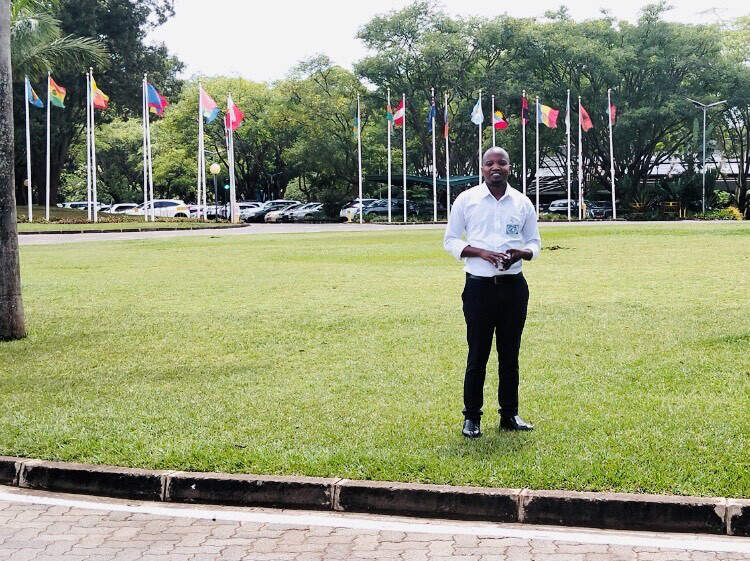
Laudato Si’ Animator Evans Otieli at the UN complex in Nairobi
Across Africa, Laudato Si’ Movement’s grassroots champions are following policy debates and engaging decision makers. Laudato Si’ Animator Evans Otieli recently joined fellow environmentalists, policymakers, and global changemakers at the 169th Meeting of the Committee of Permanent Representatives (CPR), held at the United Nations Complex in Nairobi This significant gathering brought together stakeholders from around the world to discuss pressing environmental issues and chart a course for future action through the United Nations Environment Programme (UNEP).
Having grassroots champions like Laudato Si’ Animators at these gatherings is crucial. By lifting up a united voice and sharing the power of our faith together, we bring an essential perspective to decision makers.
The session covered four key agenda items:
- The Quarterly Report and Statement by the Executive Director provided an update on the progress of key environmental programmes, highlighted ongoing challenges, and set the tone for upcoming strategic actions.
- The formulation of a medium-term strategy for 2026–2029, coupled with the draft programme of work and budget for 2026–2027, both of which are essential in determining UNEP’s direction, resource allocation, and priority areas in the coming years.
- A review of evaluation and audit reports submitted by stakeholders from various countries and institutions, aimed at assessing transparency, impact, and alignment with global environmental goals.
- Initial preparations for the seventh session of the United Nations Environment Assembly (UNEA-7) are scheduled to be one of the most significant environmental governance events globally.
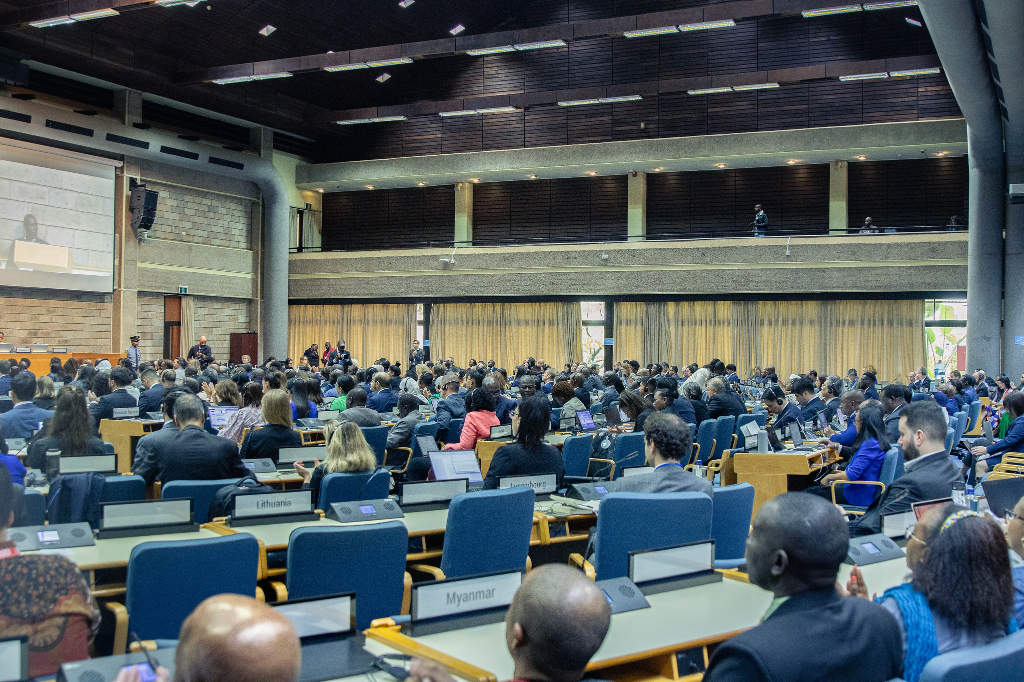
UN Complex in Nairobi (photo UNEP/Ahmed Nayim Yussuf)
Equally important was reviewing evaluation reports and audits submitted by a range of international stakeholders. These assessments serve as accountability tools, providing valuable insights into the impact and effectiveness of ongoing projects. Additionally, the meeting marked the beginning of preparations for the seventh session of the United Nations Environment Assembly (UNEA-7), which is expected to play a pivotal role in shaping the next phase of global environmental governance.
As the intersessional body of UNEA, the Committee of Permanent Representatives holds a crucial role. It regularly reviews the implementation of UNEA outcomes, advises on the development of work programmes and budgets, and offers oversight over the Secretariat’s operations. Its work ensures that UNEP remains transparent, focused, and responsive to global ecological needs.
Evans’ participation in this meeting ensured that the triple planetary crisis was on the agenda. Addressing climate change, biodiversity loss, and pollution together are essential, as “everything is connected.”
Engaging in high-level policy discussions is vital to ensuring that the voices of civil society, youth, and grassroots movements are heard and reflected in international frameworks. These dialogues reaffirm the shared responsibility we all hold in protecting our typical home. As we face escalating environmental threats, unified action and inclusive leadership are more important than ever to achieve lasting, systemic change for both people and the planet.