




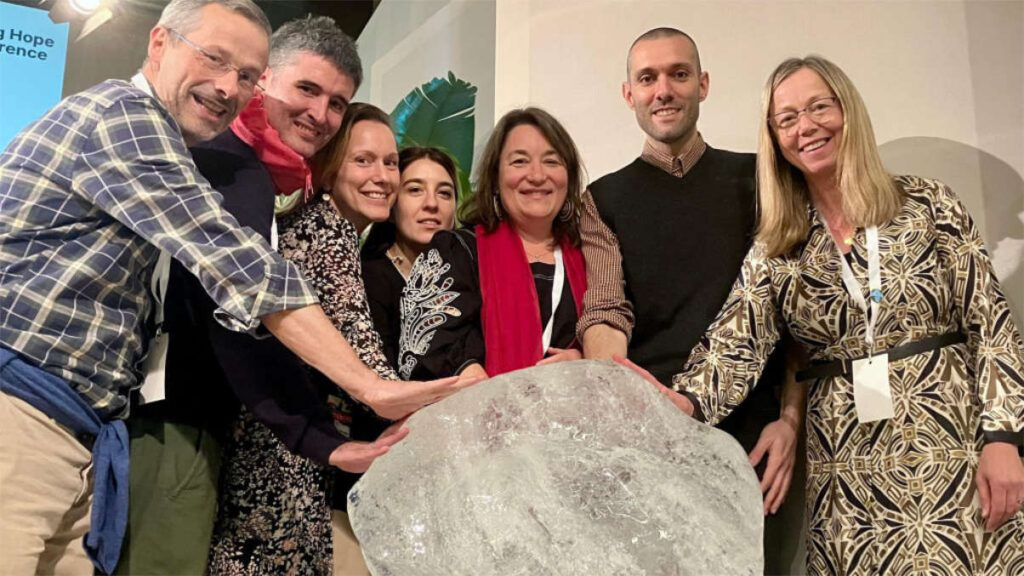


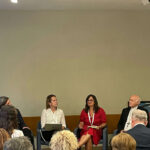
ELSiA’s participation at the Raising Hope Conference renewed the call for ecological conversion and faith-based climate action. Insights emerged from the dedicated panel featuring Caritas Europa, JESC, Justice and peace, Cardinal Nemet and the results of the “Living Laudato Si’” baseline survey.
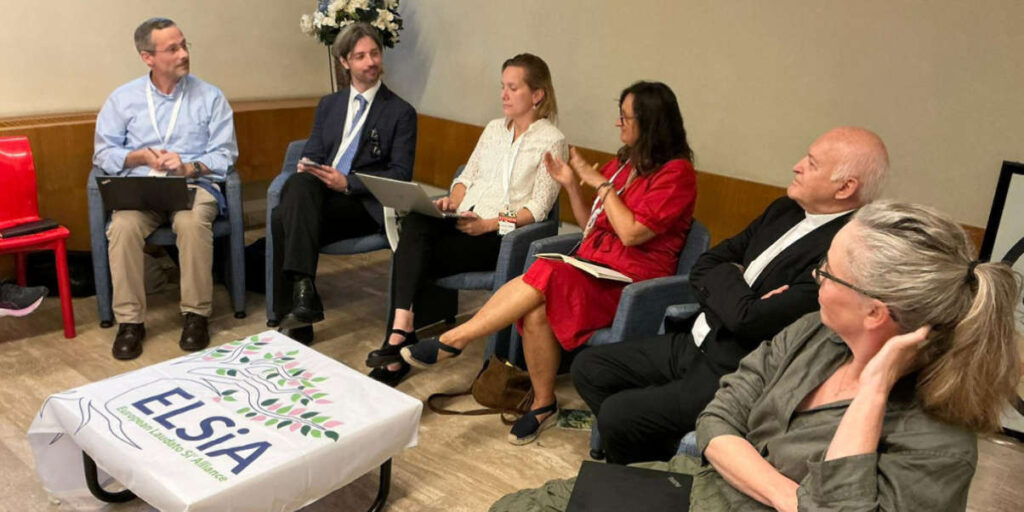
A baseline survey exploring how Laudato Si’ is being lived in Europe – and responding to the question “What has Laudato Si’ achieved on the continent?” – was presented during the panel session dedicated to ecological conversion in Europe, at the Raising Hope Conference, the landmark gathering celebrating the tenth anniversary of Laudato Si’ and reaffirming the Church’s mission to care for our common home (Rome, 1-3 October).
The panel featured Cardinal Nemet (CCEE), Maria Nyman (Caritas Europa), Filipe Martins SJ (JESC), Maria Hammershøy (Justice and Peace Europe), and Dr. Roland Daw (University of St. Mary, UK), exploring how Laudato Si’ has inspired change across Europe and how faith communities can continue advancing ecological conversion amid today’s environmental and social challenges. Let’s begin with the survey results, conducted between 2023 and 2024 through the joint effort of five universities – St Mary’s University, London; Universidade Católica Portuguesa, Lisbon; Università Cattolica del Sacro Cuore, Milan; Universitat Ramon Llull, Barcelona; Catholic University of Croatia, Zagreb – and based on responses from 202 organizations.
Dr. Roland Daw shared that nearly all respondent organizations reported that Laudato Si’ had at least some impact on their work, with over one-third describing that impact as “substantial” or greater. About half of them were already engaged in ecological work before the publication of Laudato Si’, yet the vast majority believe their commitment to integral ecology continues to grow. The results also confirmed that ecological action is also a collaborative action. However, a point for reflection emerged: among the Laudato Si’ Goals, those most closely linked to economics – such as simple lifestyles, the cry of the poor, and ecological economics – were the least frequently addressed.
A touch of realism: the survey also revealed that half of the organizations allocate less than 10% of their financial resources to integral ecology. As for human resources, 90% rely primarily on volunteers. Looking toward the next decade of Laudato Si’ in Europe, one wish stands out: the ability to integrate economic dimensions more effectively into ecological projects.
Offering another perspective, Filipe Martins, SJ (director of JESC), reflected on Europe’s ecological journey: taking stock and advancing Laudato Si’. He highlighted the Carbon Initiative (carboninitiative.eu), which supports faith-based institutions and religious communities in assessing their ecological practices, measuring their carbon footprints (across buildings, food, travel, energy, and more), and adopting more sustainable lifestyles. He also presented the Future Generations Initiative (fitforfuturegenerations.eu), an international coalition of over 30 members launched in February 2024 with key proposals for the June 2024 EU elections.
A question naturally arose: What do we need to advance Laudato Si’ in Europe?
Three directions were identified:
- Building awareness – and practice – that Integral Ecology (living simply, caring for our Common Home, leaving no one behind) represents a contemporary expression of a “life in fullness.”
- Collaborating with non-faith-based organizations, communities, and individuals committed to the common good.
- Promoting citizen and political engagement to drive not only personal but also structural and policy change (for instance, through government-addressed COP campaigns and climate marches).
The testimony of Maria Nyman, Director of Caritas Europa, illustrated how Laudato Si’ has shaped the very identity of an organization. She affirmed that “Laudato Si’ has been a real eye-opener for better understanding our mission as Caritas, serving the poor, the most vulnerable, and the excluded.” Today, Integral Ecology stands as a pillar of Caritas’ strategy: “We need to address it in order to tackle the root causes of poverty and marginalization.”
She also spoke about Europe’s responsibility in the ecological crisis and its significant carbon footprint: “Awareness is needed; acceptance is needed, that we are not only part of the problem, we are causing it.”
Caritas Europa has taken concrete steps in this direction, notably through its Just Economy publication, which examines Europe’s role in building an economy that serves the common good. You can read the full report here.
All of this work remains deeply rooted in spirituality. The eco-spiritual dimension was expressed by praying together for the Earth. This session, led by LSM Europe Director Laura Morosini, highlighted how eco-spirituality practices are taught in Laudato Si’ Animators training and shared in all Season of Creation guides and Laudato Si Prayer book. We hope that soon, upon entering every church, we will all experience the beauty of praying for Creation (Prayer for the Earth).
About ELSiA – The European Laudato Si’ Alliance (ELSiA) – of which the Laudato Si’ Movement (LSM) is a founding member – is a network of Catholic organisations working together to bring the encyclical letter Laudato Si’ to life.
Founded in 2019, ELSiA’s mission is to spread and implement the vision of integral ecology, as expressed in Laudato Si’, Fratelli Tutti, Laudate Deum, and other key documents of Catholic Social Teaching, throughout European society, EU institutions, and Catholic organizations. Its goal is to strengthen the Church’s holistic commitment to caring for our Common Home. ELSiA’s work focuses on three dimensions: Eco-spirituality, Eco-praxis, Eco-advocacy.
Its members include the Laudato Si’ Movement, Caritas Europa, CIDSE, Don Bosco International, JESC, Justice and Peace Europe, and Pax Christi International, COMECE (Commission of Bishops conferences in the European Union).
Read also the article published on the ELSiA website on how the alliance continues to amplify the Laudato Si’ voice in Europe.