





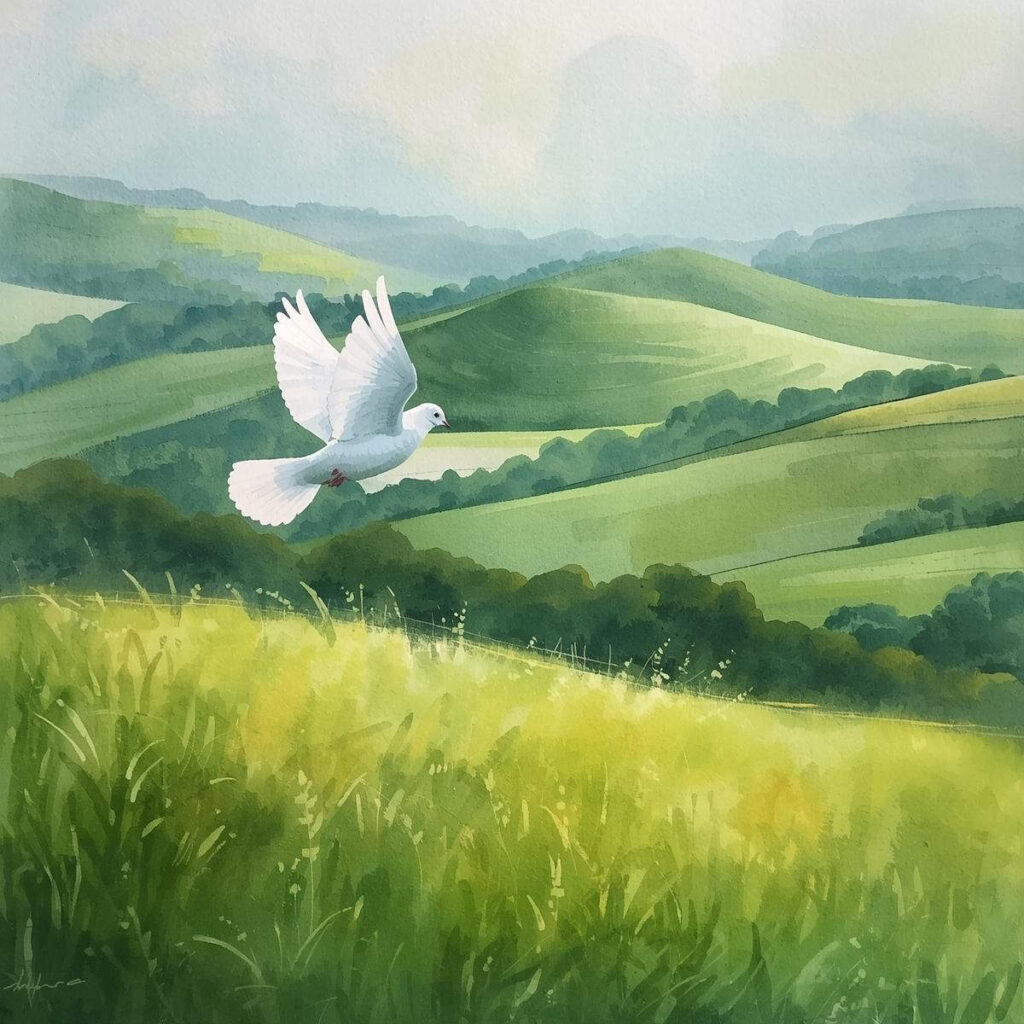
World Day of Peace 2026 | Pope Leo XIV
In his message, Pope Leo XIV invites us to imagine—and courageously build—a peace that is unarmed: a peace no longer sustained by fear, threats, or the false security of weapons. This vision is not naïve or detached from reality. On the contrary, it is rooted in the Gospel and in a profound trust in the dignity of every human person.
A peace maintained by arms is never secure; it is a fragile truce built on mistrust. An unarmed peace grows instead where human dignity is respected, where listening replaces suspicion, and where the common good is placed above narrow interests.
A Peace That Transforms Hearts
Disarming violence through justice, dialogue, and fraternity
Yet the Pope’s message goes further still. We are also called to a disarming peace—one that does not merely avoid violence, but actively transforms relationships. This is a peace capable of breaking down walls, healing memories, and opening new paths where wounds and divisions once prevailed.
To disarm the world begins with disarming our own hearts: letting go of control, resentment, and the subtle forms of violence hidden in our words, attitudes, and social structures. In this vision, justice and fraternity become the only “weapons” capable of building a shared future.
“Peace Be With You”: A Gospel Greeting That Becomes a Mission
The theme of the message draws directly from the words of the Risen Christ: “Peace be with you” (Jn 20:19). This greeting is more than a gesture of comfort—it is a mission. Christ speaks these words in a moment of fear and uncertainty, opening new beginnings behind closed doors.
This greeting is addressed to all:
- believers and non-believers,
- political leaders and citizens,
- families, communities, and movements like our own.
It is an invitation to build the Kingdom of God here and now, through daily choices, through our care for the most vulnerable, and through the way we relate to one another and to creation.
An Unarmed Peace at the Heart of Laudato Si’
This call to an “unarmed and disarming” peace finds a profound echo in Laudato Si’. Pope Francis, through his teaching on integral ecology, reminds us that “everything is connected” (LS 91). War, environmental destruction, and social injustice are not separate crises, but interconnected expressions of the same broken relationships—with God, with one another, and with the Earth.
An armed peace seeks security through domination. Laudato Si’ peace seeks security through care.
Weapons, extractive economies, and unjust systems leave behind the same wounds: devastated ecosystems, displaced communities, and futures stripped of hope. To disarm, then, is not only to lay down weapons, but to dismantle the structures that sacrifice the poor and the planet in the name of power, profit, or false progress.
Integral Ecology as a Path to Peace
Laudato Si’ calls us to an integral ecology—one that holds together environmental, social, cultural, and spiritual dimensions. From this perspective, peace cannot exist where ecosystems are destroyed, where water is poisoned, or where communities are forced to migrate because their lands can no longer sustain life.
A disarming peace begins when we restore right relationships:
- with the Earth, our common home;
- with the poor, who suffer first and most from ecological collapse;
- and with future generations, who will inherit the consequences of today’s choices.
Caring for creation, therefore, is not optional—it is a concrete and necessary act of peace.
From Prayer to Action: The Mission of the Laudato Si’ Movement
The World Day of Peace reminds us that prayer and action cannot be separated. For the Laudato Si’ Movement, this means transforming contemplation into commitment and hope into concrete change.
Each Laudato Si’ Circle, advocacy effort, educational initiative, and act of ecological care becomes a living expression of the Risen Christ’s greeting: “Peace be with you.” A peace that heals, restores, and reconciles.
Choosing Peace by Caring for Our Common Home
To walk toward an unarmed and disarming peace is to choose a different future—one rooted in care rather than conquest, relationship rather than exploitation, and love rather than fear.
By responding to this call, the Laudato Si’ Movement bears witness that peace is not only possible—it is already being built wherever people commit to protecting life, defending dignity, and caring for our common home.