





Muheto Roberto, Assistant Chapter Leader of Burundi, Laudato Si Movement Burundi
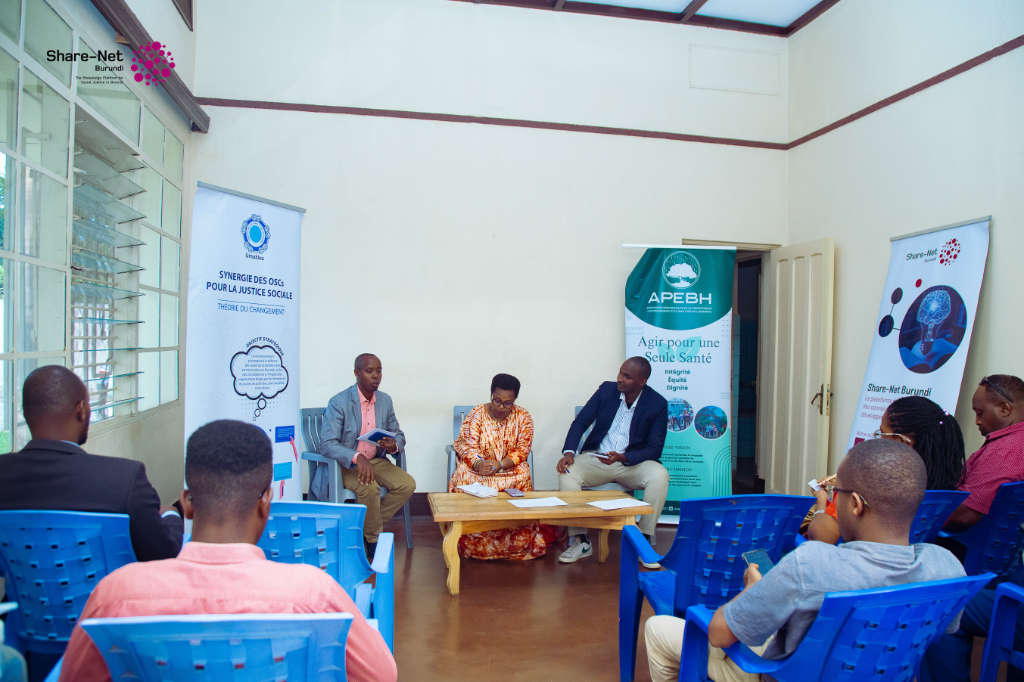
On December 11, 2025, the Laudato Si’ Movement Burundi, in collaboration with the Association APEBH Burundi, organised a round table session in Burundi on a silent crisis: air pollution, with the theme “Indoor and Outdoor Air Pollution: Preventive Measures for Health.”
It was a time to convene researchers, policymakers, youth organisations, and members of the Laudato Si Movement to discuss this serious health and environmental threat.
The discussion focused on four pollutants known as Short-Lived Climate Pollutants (SLCPs): Methane, Fine particulate matter, nitrogen oxides, and Hydrofluorocarbons (HFCs). These are the most significant pollutants responsible for Air Pollution and for contributing to global warming.
The discussion provided a stark map of pollution sources in Burundi, moving from global statistics to local realities:
-
- Methane: An Agricultural and Waste Challenge
Mrs Ngenzebuhoro, leading Burundi’s Fourth National Communication on Climate Change, highlighted agriculture as a primary source. Dr. Norbert Manirakiza, an environmental science PhD, added a critical layer, noting his research identifies municipal waste dumpsites as significant, often overlooked, methane emitters. This gas is not only a potent climate warmer but also affects Air Quality. - Dr Manirakiza showcased the source of PM2.5 (microscopic particles that penetrate deep into the lungs and bloodstream). In urban areas, the primary sources are vehicles and heavy trucks running on fuel. In households, the primary energy source is firewood for cooking and heating. This aligns with findings from the map of countries: 91% of its population uses this method for cooking.
- Methane: An Agricultural and Waste Challenge
- Participants noted a severe gap in the nation’s capacity to manage this crisis: the critical lack of air quality monitoring stations and equipment. As revealed in a prior session, Burundi may have only one such device confined to a laboratory. The lack of data makes it difficult to develop evidence-based policies and to track areas with high levels of air pollution.



The moral imperative is clear. As Pope Francis states in Laudato Si’, “We are faced not with two separate crises, one environmental and the other social, but with one complex crisis which is both social and environmental.”
According to the WHO, 7 million premature deaths worldwide are attributed to air pollution. It is a sign of a human failure in their way of development that has put aside the protection of human life and dignity, and disproportionately affected the poor, women and children who bear the most significant exposure.
The Path Forward: Integrated Action
A unanimous conclusion emerged from the session: tackling this dual crisis requires breaking down the old manner of work. There must be deliberate, structured collaboration between the three pillars:
- The Scientific world: For localised research, data gathering, and solution development.
- The Policymakers: To translate evidence into laws, standards, and national plans, integrating air quality into climate and health strategies.
- The Implementation: To scale up clean cooking technologies, renewable energy, sustainable waste management, and cleaner transport.


There is a pressing need for an energy transition that reduces reliance on fossil fuels and expands access to clean cooking technologies, which are often inaccessible to the poor and underserved. This will benefit not only our Mother Earth, which is crying, but also our own lives.
This session has helped take a first step in building a coalition for clean air for all in Burundi—for the health of our communities and the integrity of our common household.