





Dr. Lorna Gold, Executive Director, Laudato Si’ Movement
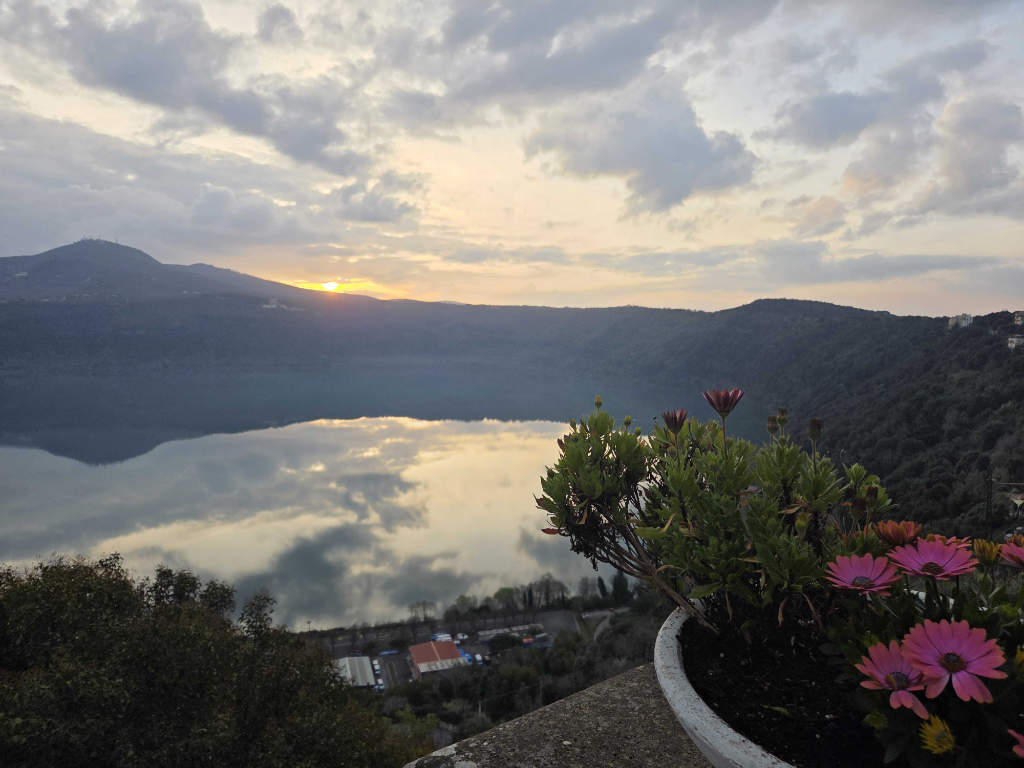
I have just returned from three intense and hopeful days in Castel Gandolfo, just outside Rome. It was one of those moments when several strands of life, work, and faith suddenly seem to weave together into a larger story.
Two important gatherings took place there this week: the General Assembly of the Focolare Movement and the inaugural meeting of the Global Alliance for Laudato Si’.
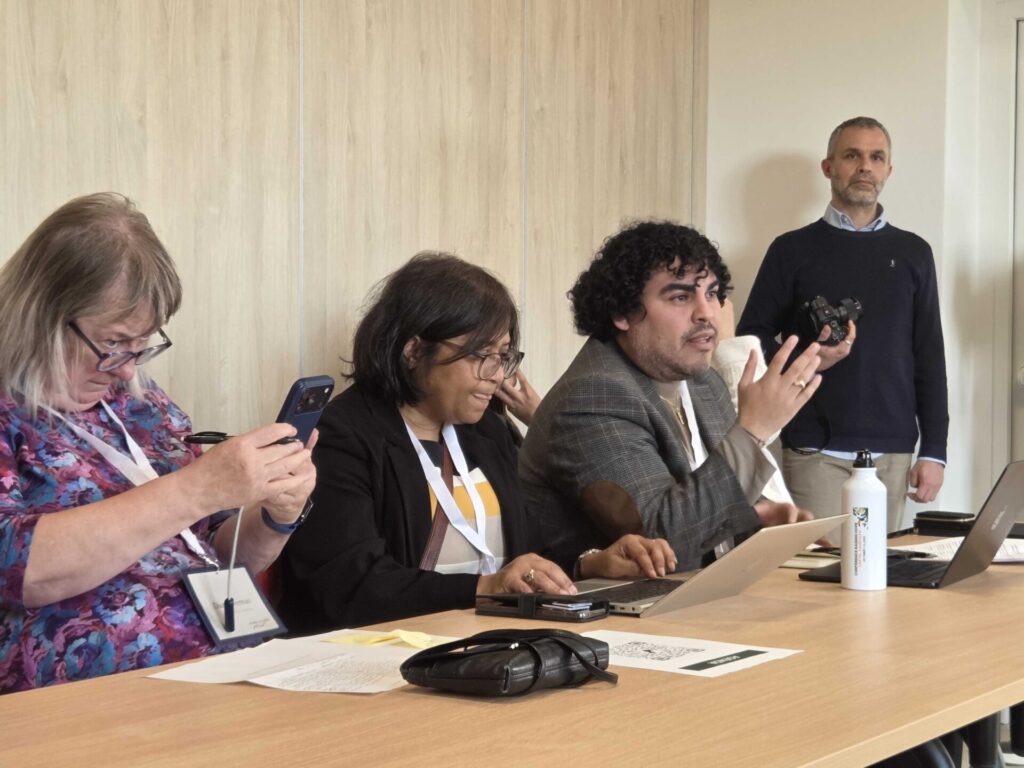
Both events, in different ways, pointed toward the same emerging reality: a growing convergence within the Catholic Church around the vision of integral ecology.
And for me personally, it felt like something of a return home.
A Place That Keeps Reappearing
My connection with Castel Gandolfo goes back nearly forty years.
I first visited the Mariapolis Centre, the international centre of the Focolare movement, when I was just fifteen years old. Like many who have spent time there, I fell in love with the beauty of Lake Albano, the peaceful gardens, and the atmosphere of reflection and prayer.
In recent years, however, I visited less often. My work moved in different directions, and during the pontificate of Pope Francis, the papal summer residence itself remained largely unused.
But in the last few years, something remarkable has begun to happen.
Several developments—almost like pieces of a puzzle—have started to converge in Castel Gandolfo.
One of the most significant is the creation of Borgo Laudato Si’, a cultural and educational centre established by the Vatican in the historic papal gardens. It is designed as a place of formation, dialogue, and encounter focused on integral ecology and care for our common home.
At the same time, Pope Leo XIV has resumed regular visits to Castel Gandolfo, spending time each week in the Laudato Si’ gardens for prayer, reflection, and rest.
Meanwhile, my own path—through the Laudato Si’ Movement and renewed collaboration with the Focolare Movement—has increasingly brought me back there.
Last year this convergence became visible when the Focolare co-hosted the Raising Hope conference in Castel Gandolfo, with the Pope present. That gathering brought together Church leaders and climate advocates to explore how the Church could respond more boldly to the climate crisis.
So returning this week, it felt almost as though several roads—personal, ecclesial, and institutional—were all leading back to the same place.
Peace, Unity, and the Ecological Crisis
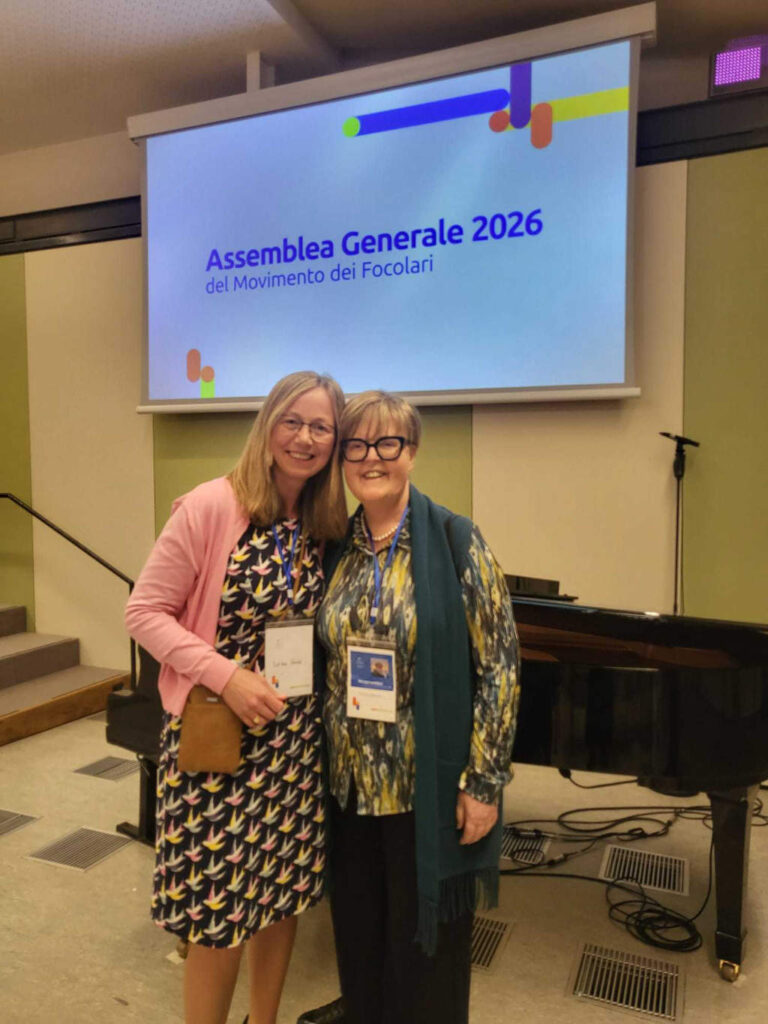
The first event I attended was the General Assembly of the Focolare Movement, which takes place every five years.
The Assembly sets the direction for the movement’s life and mission for the coming period, electing leadership and discerning priorities. I was invited to speak about the relationship between peace, unity, and integral ecology.
For me, this was not simply a theoretical question. It was deeply personal.
Growing up, my family experienced profound suffering—the death of my father when we were young, and later a devastating fire in our home. During those years, my mother found strength and healing in the Focolare spirituality, especially its core message: the charism of unity.
That charism traditionally focuses on reconciliation among people—building a “new humanity” rooted in fraternity and love.
But today we face another profound rupture: the broken relationship between humanity and creation.
My message to the Assembly was simple but challenging.
The call to unity and the call to ecological conversion are not separate missions. They are the same call.
There can be no lasting peace between peoples if we remain at war with the Earth.
There can be no reconciliation among nations if the ecological systems that sustain life are collapsing.
Integral ecology reminds us that everything is connected.
Care for creation is therefore not just one more issue among many. It is the common ground on which a new global solidarity can be built.
Encouragingly, the message seemed to resonate. Many participants approached me afterwards to share how their communities were already engaging with the Laudato Si’ Movement—from Africa to Oceania to Latin America.
That quiet network of collaboration is already growing.
Universities and the Next Phase of Laudato Si’
The second event took place in the Borgo Laudato Si’ itself: the inaugural meeting of the Global Alliance for Laudato Si’, a university-led initiative bringing together Catholic academic institutions to advance research and action around integral ecology.
Universities from across the United States, Latin America, Africa, and Europe were represented, with University of Notre Dame playing a key convening role.
The central question being explored was straightforward:
What added value could this global network bring in the face of a polycrisis?
For me, the answer lies in a new kind of collaboration – radical collaboration.
The ecological crisis cannot be solved by science alone, nor by spirituality alone. It requires an integration of technological knowledge, ethical reflection, social mobilisation, and institutional change.
Universities are uniquely positioned to help bring these dimensions together.
During the meeting, I was accompanied by Alonso de Llanes, director of the Laudato Si’ Action Platform. He shared encouraging news: there are already 263 Catholic universities enrolled in the platform, working toward comprehensive ecological sustainability across their operations, teaching, and community engagement.
This is a remarkable foundation.
But the real opportunity lies in scaling this transformation across the entire Catholic higher education sector.
Two ideas in particular stood out.
Universities Leading by Example
This initiative should not be limited to research consortia or academic publications.
Catholic universities must also become living laboratories of integral ecology—transforming their investments, energy systems, land use, governance structures, and curricula.
Leadership through example is far more powerful than theory alone.
Formation at Scale
Another promising avenue is linking university resources with grassroots formation programmes such as the Laudato Si’ Animators training.
Universities could help provide accredited learning pathways, deepen theological and scientific formation, and expand access to training worldwide.
This could significantly scale the movement for ecological conversion within the Church.
A Home for the Growing Laudato Si’ Ecosystem
The setting of Borgo Laudato Si’ itself reinforces this vision.
Over the past few years I have visited the site several times, watching it gradually take shape. What is emerging there is more than a beautiful conference centre.
It feels increasingly like a meeting place for a vast global ecosystem of initiatives inspired by Laudato Si’.
Religious orders, universities, grassroots movements, parishes, and local communities all have a role to play. If these different actors can find spaces for encounter, dialogue, and cooperation, something powerful could emerge.
The Catholic Church is a global community of 1.2 billion people, with vast institutional reach through schools, universities, dioceses, hospitals, and social organisations.
If these institutions begin to align around a shared commitment to ecological conversion, the potential impact is enormous.
Not only within the Church itself, but also in shaping public policy, economic priorities, and cultural values.
A Fitting Legacy
As the first anniversary of Pope Francis’ death approaches on 21 April, it is worth reflecting on the legacy of his landmark encyclical, Laudato Si’. The document was never intended to remain simply a text. It was a call to transformation.
What I sensed in Castel Gandolfo this week was the early emergence of something that could carry that call forward: a broad collaboration of institutions, movements, and leaders committed to making integral ecology a lived reality.
Not as an optional concern. But as a central expression of Christian faith. After all, the Christian vocation has always been clear: to be caretakers of God’s creation, and guardians of our common home.
And perhaps it is no coincidence that this new chapter is beginning in a place long associated with rest, reflection, and renewal. For now, at least, it seems that many roads are leading back to Castel Gandolfo.