

In this interview, we speak with Mateusz Ciasnocha, Co-Founder & Co-CEO of the Farm of Francesco, as well as a third-generation Polish Farmer and CEO of European Carbon Farmers and.
Drawing on his family’s 700-hectare regenerative farm and his roles with the UNFCCC Climate Champions, the Economy of Francesco, the EU Soil Mission, and UN Food Systems Summit, Mateusz brings both hands-on farming experience and global perspective to the work of advancing regenerative agriculture. He reflects on the evolution of the Farm of Francesco’s Farmer Trainings and the importance of bridging practical farming realities with international policy conversations.
What inspired your approach to farmer training, and what makes these sessions in Ireland distinct from those in Nigeria and Italy?
The Farm of Francesco’s (FoF) Farmer Trainings are a direct response to Pope Francis’ call to address the “Cry of the Earth and the Cry of the Poor”. They were co-created within the Economy of Francesco’s (EoF) Agriculture and Justice Village at its inception in 2020. A group of about 15 young people passionate about agriculture, farming, and food from around the world came together to apply the See–Choose–Act model within the contexts we each knew.
It was through this design-thinking process that the concept of Farmer Trainings emerged—not only as a promising idea to develop but as something that, once tested, proved to work.
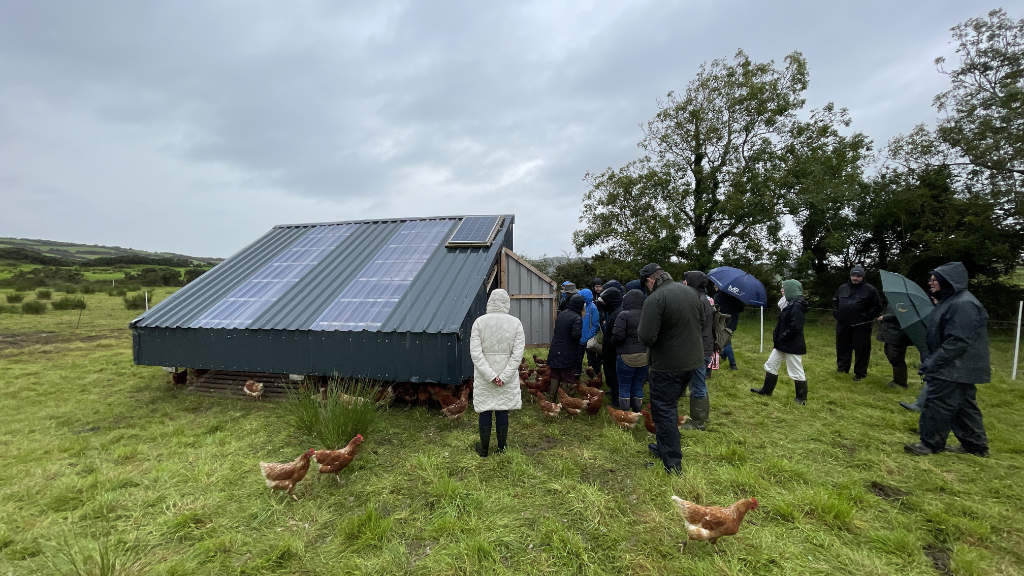
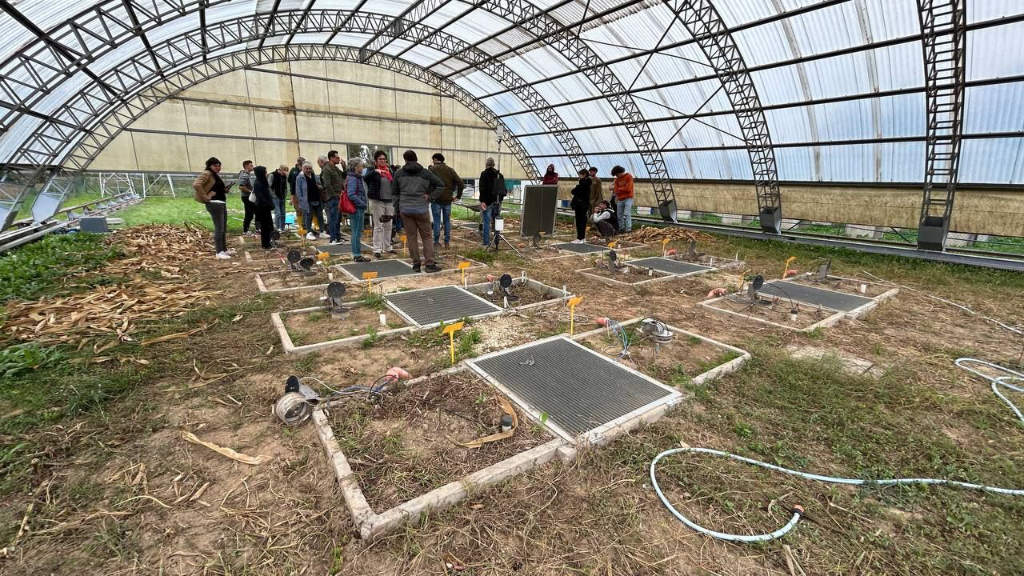
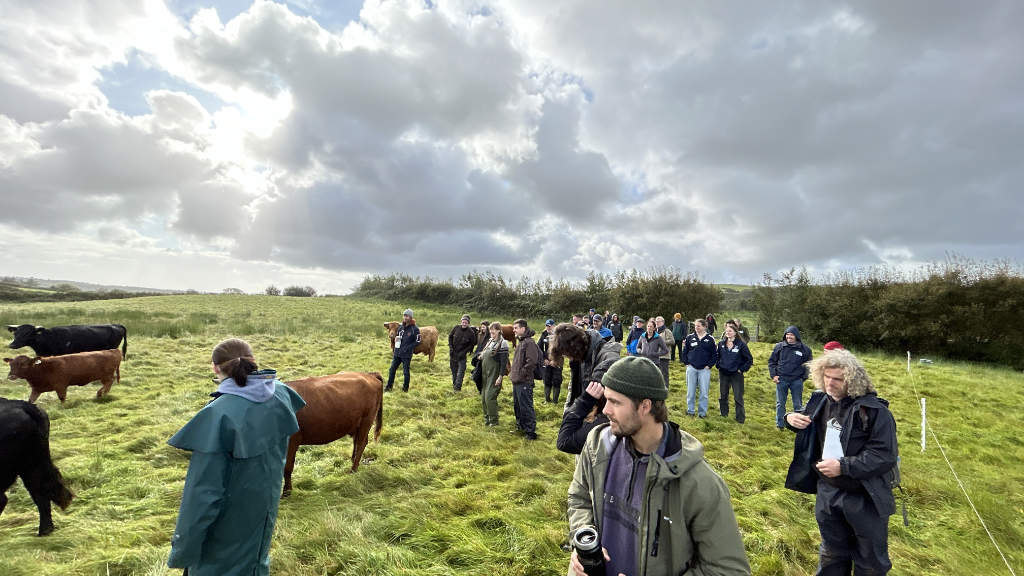
Our Farmer Trainings to date—Nigeria in 2023, Italy in 2024, and two in Ireland in 2025—have much in common. In each location, we co-design the program with our local and international partners, intentionally incorporating the three pillars of FoF’s Farmer Trainings:
- Regenerative agriculture,
- Entrepreneurship,
- Spirituality.
These pillars form the core of every Training we have conducted and will continue to guide all future sessions. How we co-create each “Space of Encounter”—which is how we understand Farmer Trainings—depends on local context, needs, and resources. For example, in Nigeria, we focused on medicinal plants and snail farming, while in Ireland, we emphasized Korean Natural Farming practices.
What key insights or outcomes emerged from the recent UNCCD Workshop in Bonn?
Two experiences from our recent YSI for the UN Rio Conventions Workshop at the UNCCD Headquarters in Bonn, Germany — co-funded by European Carbon Farmers — stand out for me.
First, we can achieve far more than we ever imagine. A few years ago, even visiting a UN campus anywhere in the world felt like a distant dream. Today, as the Farm of Francesco, we not only support UN processes — particularly the UN Rio Conventions on Climate (UNFCCC), Desertification (UNCCD), and Biodiversity (UNCBD) — but, as this Workshop demonstrated, we now work with them hand-in-hand. We are Partners. Of course, this did not happen overnight, but—as my Co-Founder & Co-CEO, Maria Virginia Solis Wahnish, likes to say—when you share the same values, crossing paths is only a matter of time.
Second, no matter how small you are, you can make a meaningful difference. Do not let what you lack stop you from acting. Imagine FoF — a relatively young and small organization, especially by UN standards — entering a partnership with the UNCCD. During the workshop debrief, participants learned that the entire UNCCD Secretariat has fewer than 100 staff. It is astonishing how much impact such a small team can have.
How do you see these Farmer Trainings influencing broader policy or UNFCCC COP30 discussions?
At the Farm of Francesco, our mission is to create spaces of encounter with the objective of building bridges. We believe the bridge between practice and policy is the most important one to construct — and also one of the most challenging. We focus on creating those “aha” moments when missing connections suddenly become clear.
At the Farmer Training level, this often happens when a leading lighthouse farmer demonstrates that regenerative agriculture is not only possible but practical. It becomes less about a cold case study — though data remains essential — and more about a person sharing her or his lived experience. The impact is even greater if those experiences are communal.
We bring this experiential knowledge into conversations with policymakers, who are often distant from day-to-day farming realities. Agriculture and food systems are the foundations of society: many of us are fortunate to eat three times a day, while many others — especially in the Global South, though not only — go to bed hungry or suffer malnutrition despite consuming enough calories. These challenges are best addressed when policymakers understand farming firsthand.
What has been the most rewarding aspect of engaging farmers and policymakers in parallel?
Definitely the “aha” moments mentioned earlier. These are the moments when friendships take shape, when people truly open up and connect. It stops being about “me” and “you,” or “us” and “them,” and becomes about us. That, in a very real way, makes the world a better place.
A great example happened just yesterday. I attended a workshop envisioning the ideal farm in 2050 and identifying what actions we need to start taking today. During the meeting, a colleague I knew only superficially mentioned a conference his institution is organizing on the EU–MERCOSUR agricultural debate — a topic that naturally requires bridge-building.
As we reviewed the draft agenda, I noticed that all the speakers were from the EU. That is hardly a setup that encourages dialogue.
Despite my hesitation, I suggested aiming for at least a 50–50 split between EU and MERCOSUR panelists — or even favoring MERCOSUR voices, since the conference will take place in Poland for a Polish audience. To my delight, that colleague — now much closer than just 24 hours earlier — called to say the suggestions were excellent and that he would like to invite the experts I recommended as panelists.
What call to action would you like to leave readers with, especially our Europe-based audience?
Thank you for reading this far—I am deeply grateful. I have three calls to action:
- Visit a Farmer.
- Introduce yourself to your elected representatives at the regional, national, and international levels.
- Connect — using the Laudato Si’ Action Platform if helpful — with someone in your same field (for example, a Farmer if you are a Farmer) who lives on the other side of the world.
And, of course, please get in touch with us so we can explore how to train more farmers across the world together. Our dream is to conduct four Farmer Trainings per year, following a 3:1 ratio between the Global North and the Global South. Through this, we hope to bring farmers’ voices more strongly into global processes, especially the UN Rio Conventions.
And finally, if the Economy of Francesco is still new to you, I hope you’ll explore it — especially if you’re a young person seeking to help build what comes next.