





In March 2023, the Irish Catholic Bishops’ Conference made a groundbreaking and prophetic commitment: by 2030, 30% of all church grounds in Ireland will be returned to nature. This initiative, inspired by Laudato Si’ and the Church’s growing ecological awareness, directly addresses the biodiversity and climate crises. Restoring green space not only protects habitats and native species—it also enhances local climate adaptation and resilience.
National Mobilization and Government Support
This faith-driven effort has inspired wider national action. In May 2025, Ireland’s Ministers for Housing, Heritage, and Local Government announced €2.9 million in funding for 262 local biodiversity projects through the Local Biodiversity Action Fund (LBAF). This significant public investment has enabled many county councils and Biodiversity Officers to collaborate with parishes and dioceses to implement the “Return 30% to Nature” project at the grassroots level.
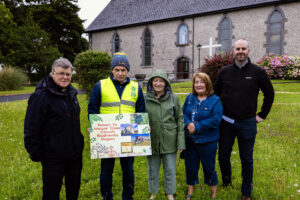
Currently, the initiative is active in five dioceses—and growing—showcasing how shared values and collaboration between faith communities and local authorities can lead to meaningful ecological action.
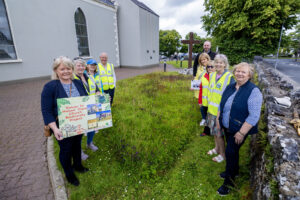
Local Leadership in County Clare: A Model for Others
A standout example is the Return to Nature Clare Church Biodiversity Project, led by Barry O’Loughlin, Biodiversity Officer at Clare County Council. The project is funded jointly by the LBAF and Clare County Council, in partnership with the Diocese of Killaloe (both the Roman Catholic Church and the Church of Ireland) and the Laudato Si’ Movement in Ireland.
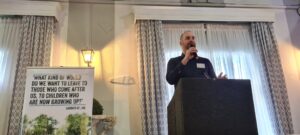
This initiative empowers local communities and parish priests to take tangible action for nature. Key activities include:
- Creating wildflower meadows
- Installing swift and bat nest boxes
- Partnering with local farmers to install barn owl boxes
- Engaging groups like Ennis Men’s Shed to build bird tables
- Planting pollinator-friendly fruit trees
- Providing biodiversity training for community members
- Developing pollinator plans for churchyards
What started in early 2024 with 12 church communities across 10 parishes has now grown to 23 church communities across 20 parishes. Remarkably, almost a quarter of all parishes in County Clare are now actively participating in biodiversity actions on church grounds.
Inspired by the success in Clare, several other Local Authority Biodiversity Officers across Ireland are now initiating similar projects. The Heritage Council is also developing national guidelines to support biodiversity actions on faith grounds, signaling institutional support for this growing movement.
How Funding Works: Partnership is Key
The availability of funding depends on who leads the initiative locally. When Biodiversity Officers and local authorities take the lead, projects are typically supported by the LBAF and county councils. However, strong partnerships between faith communities, biodiversity officers, and community groups are essential for unlocking this support.
As shown in Clare, trust, coordination, and shared goals are the foundation of successful funding applications and impactful projects.
A Message to the World: Faith in Action for Our Common Home
What’s unfolding in Ireland is more than a national strategy—it is a living testimony to the power of connection and collective purpose. It shows that communities of faith can be powerful catalysts for ecological transformation, turning sacred spaces into sanctuaries for nature.
As the world urgently seeks local, scalable solutions to the climate and biodiversity crises, Ireland’s Church-led model shines Raising hope. It calls on people—across nations, faiths, and sectors—to imagine what’s possible when we align our moral compass with ecological responsibility.
The call to care for creation is not only spiritual—it is practical, communal, and urgent.