





September 2025
Monthly Prayer Guide
For mutual coexistence recognizing that we are all God’s creatures
Editorial page
This guide is a monthly resource for our global movement, offering reflections and testimonies to inspire us to pray, reflect, and act for creation.
September, the Season of Creation, reminds us in a special way of the gift of creation and our call to care for it. It is a time to renew our hope, deepen our commitment, and walk together as seeds of peace and hope for our common home.
In Christ, we too are “seeds of peace and hope.” The prophet Isaiah proclaims that the Spirit of God can turn barren deserts into gardens of justice and peace: “A spirit from on high will be poured out on us, and the wilderness will become a fruitful field… The work of righteousness will be peace, and the effect of righteousness, quietness and trust forever” (Is 32:15–18).
These words will guide us during the Season of Creation 2025 (1 September – 4 October). They remind us that prayer must lead to determination and concrete action if this “caress of God” is to become visible in our world (cf. Laudato Si’, 84).
Let us embrace this extraordinary year as a time to Raise Hope—celebrating the 10th Anniversary of Laudato Si’ and of the Laudato Si’ Movement, alongside the 800 years of the Canticle of the Creatures. These milestones invite us to renew our commitment to caring for creation, cherishing our common home, and deepening the bonds that unite us as one global family.
Hear Creation’s Song
Monthly intention:
For our relationship with all of creation to help build politics and economics for the common good
Quote of the month:
“Politics and the economy tend to blame each other when it comes to poverty and environmental degradation. It is to be hoped that they can acknowledge their own mistakes and find forms of interaction directed to the common good.” LS 198
God of Life

God of Life,
You love the universe into being,
Let us give praise.
You embrace the world
without distinction,
Let us give thanks.
You call humanity to make
flesh Your tenderness,
Let us live accordingly.
You endow all creation
with Your divine beauty
and wisdom,
Let us acknowledge.
You forgive all trespasses.
Let us learn Your ways.
You grace us unconditionally,
Let us receive humbly.
You are our hope,
Let us remember.
Amen.
Amy Echeverria, Columbans International, LSM Cofounding
Member and Founding Board President. United States of America.
Hear Creation’s Cry

Monthly reflection to deepen our eco-conversion
Protecting our common home in the simple of life as the university.
Guido Restituto, Laudato Si’ Animator, Laudato Si’ Circle Aversa “Vanvitelli”, Frignano, Italy
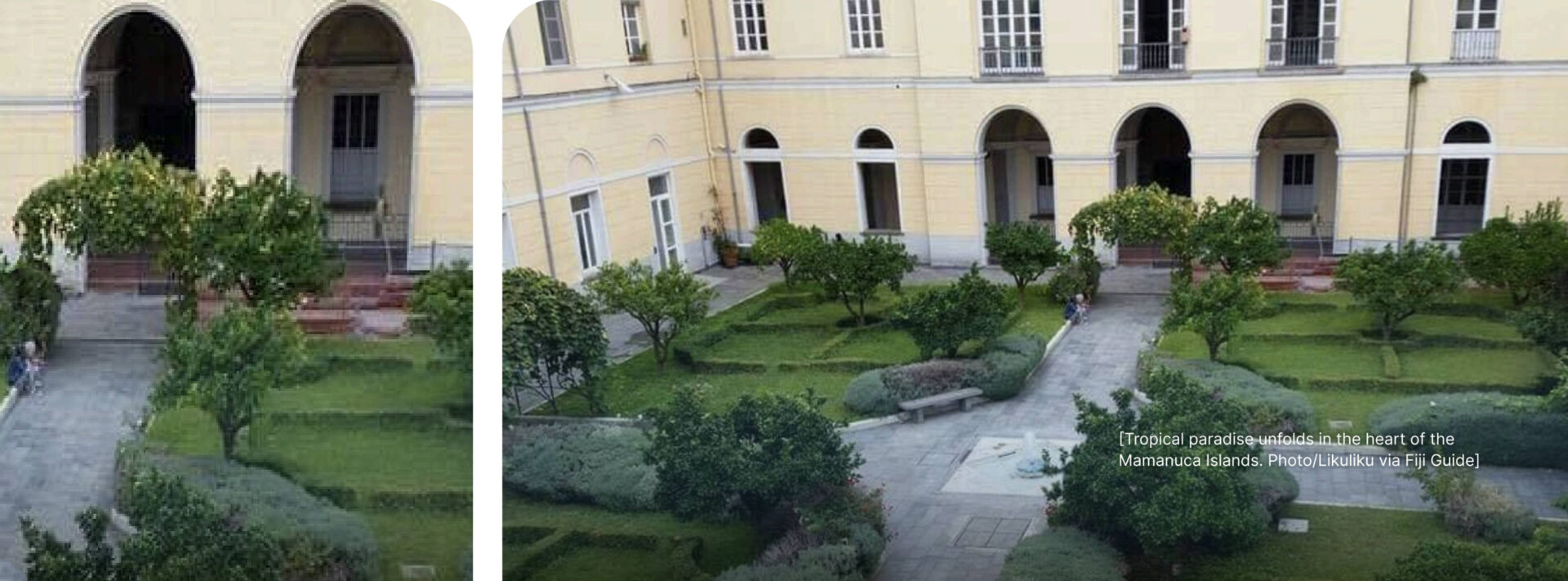
Being an engineering student at the University of Campania “Luigi Vanvitelli” means living in a place full of contrasts. The beauty of its history and culture stands beside the painful reality of pollution and environmental degradation.
The Agro Aversano, once fertile and rich, now bears the wounds of human negligence: illegal landfills, polluted air, and damaged soil. This daily reality can easily make us numb.Yet, it also challenges us to respond differently. From this place of struggle, we can begin a true ecological conversion, one that transforms how we, as young people, see the world and act for creation.
My ecological conversion didn’t happen through a single extraordinary event. It came from realizing that the environmental crisis is not an abstract issue—it touches our families, our friends, and the future we dream of.
Through the Laudato Si’ Circle “Vanvitelli,” I discovered that ecological conversion begins within. It is learning to see every creature as part of a network of relationships that deserve to be cherished. Pope Francis reminds us that this requires more than occasional gestures—it asks us to embrace the world with a new gaze, one of responsibility and gratuitous love.
At the university, this means creating spaces of encounter, where knowledge is not just for personal success but becomes a tool for justice. It means transforming learning into service, connecting what we study with the cry of the Earth and the cry of the poor.
One moment that deeply marked my journey was a project with the Social Pastoral of the Diocese of Aversa. Walking through churches, palaces, and streets in the Agro Aversano—so close to my home—I discovered forgotten treasures of history and culture. I realized that caring for creation also means safeguarding memory, beauty, and community roots.
Living ecological conversion at the University has meant making choices—reducing waste, promoting reuse, and building opportunities to learn across disciplines. It’s about more than turning off lights or sorting trash; it’s about cultivating a culture of sobriety, sharing, and hope.
Every small action—a conference on sustainability, a campaign against plastic, a research project for the common good—becomes a seed of change. Together, they transform the University into a workshop for the future, where engineering, humanities, and all fields contribute to integral development.
For me, ecological conversion is not a destination but a journey. It is nourished by relationships, daily choices, and the courage to take responsibility as a steward of the Earth. The future begins now—with humility, courage, and a shared commitment to care for our common home.
Questions
for reflection
- Where in my daily life—university, work, family, or community—do I see the “wounds of creation,” and how am I being invited to respond with hope instead of indifference?
- Ecological conversion begins within. What inner changes—attitudes, habits, or perspectives—am I being called to embrace so that my choices reflect greater love for creation?
- The Season of Creation reminds us that every small gesture matters. What concrete step can I take this week to sow a “seed of change” for the good of my community and our common home?

Hearing Creation’s Call
Participate in the Season of Creation 2025
Each year from September 1 to October 4, Christians worldwide unite in prayer and action to care for our common home. It’s a time to honor God as Creator and embrace our shared call to protect Creation. Our lives are deeply connected to the Earth’s well-being.