



Dr Lorna Gold
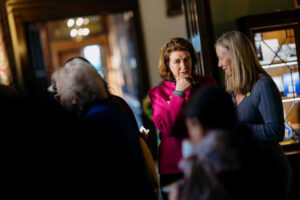
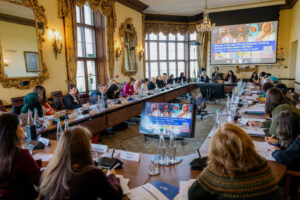
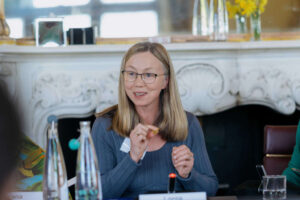
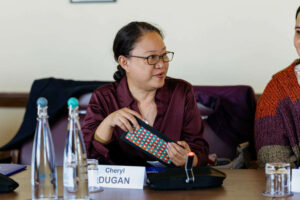
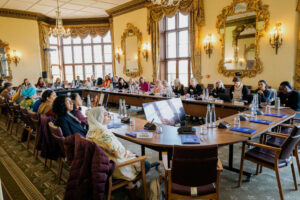
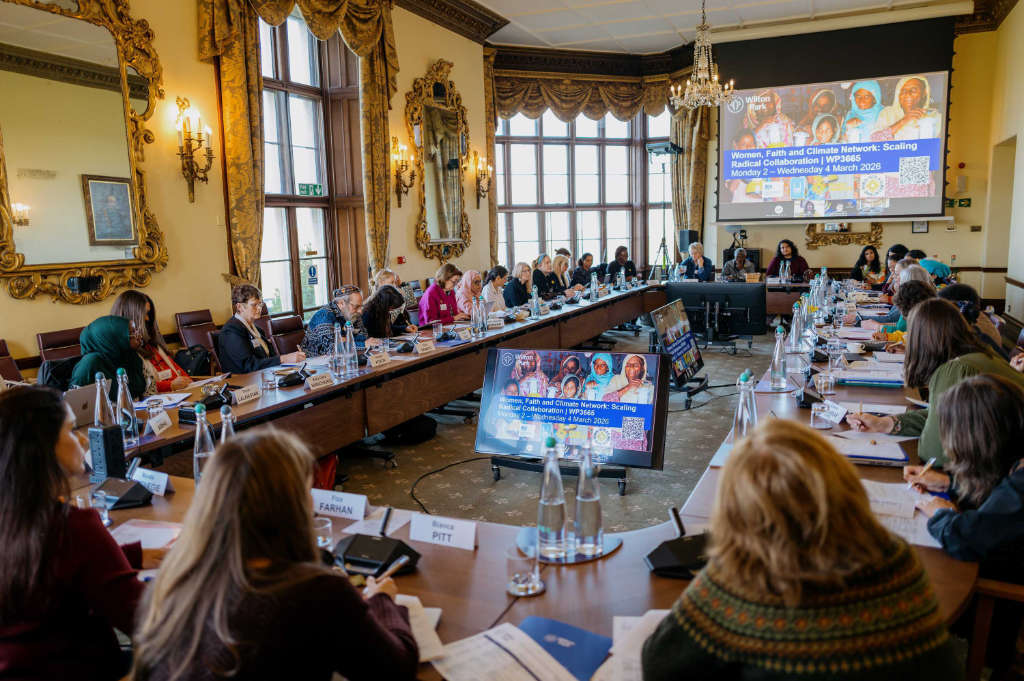
In the quiet countryside of Surrey, England surrounded by the early signs of spring, a small group gathered at Wilton Park for what became one of the most powerful multifaith meetings I have experienced in years. Over three days in early March, women and allies from across religious traditions came together through the Women’s Faith and Climate Network—a young but rapidly growing movement that is bringing women of faith into leadership on climate justice.
At a moment when headlines are dominated by war and destruction, particularly across the Middle East, the gathering felt quietly radical. In a world often shaped by division, these women came together not to argue over differences but to ask how faith could become a force for healing—both for our wounded planet and for our fractured human family.
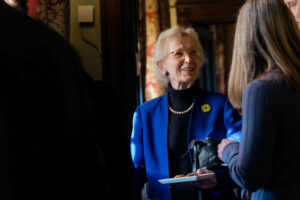
The meeting was hosted by a remarkable group of leaders already committed to mobilising faith communities for climate action. Among them was Mary Robinson, co-founder of the Dandelion Project, which seeks to amplify women’s leadership in climate solutions around the world. Her presence reflected the central theme of the gathering: when women lead, new possibilities emerge.
Yet what made this meeting particularly striking was not simply who was present, but the moment in which it occurred.
A Convergence of Sacred Seasons
As the gathering opened, participants noticed something extraordinary. Several major religious observances were unfolding at the same time: Ramadan, Purim, Lent, and Holi.
Each of these sacred seasons calls believers to pause, reflect, and transform. Whether through fasting, prayer, repentance, or celebration, they invite us to step back from the rhythms of everyday life and ask deeper questions about who we are and how we show up in the world.
For the women gathered at Wilton Park, this convergence felt more than coincidence. It felt like a sacred invitation.
The meeting opened with a reflection on the story of Queen Esther, whose courage prevented violence and saved her people. In the Jewish tradition, Esther is remembered not as a warrior but as a woman whose moral clarity and resolve changed the course of events. Her story became a powerful symbol for the gathering: a reminder that women’s leadership can avert destruction and open pathways to peace.
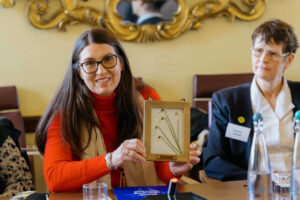
Throughout the days that followed, participants shared in each other’s sacred traditions. Jewish colleagues marked Purim and we all exchanged gifts. Muslim participants broke the Ramadan fast with their sisters from other faiths. Christian participants reflected on the meaning of Lent with a dawn prayer shared with our sisters from other faiths. These shared moments were not symbolic gestures alone; they became lived expressions of what one participant described as “radical kinship.”
Women Leading Climate Action
The purpose of the gathering was clear: to strengthen collaboration among women of faith working for climate justice.
Across the world, women in faith communities are already leading extraordinary initiatives. Participants heard about partnerships in India between SEWA and Brahma Kumaris that are bringing solar energy and clean cooking technologies to rural communities. These projects do more than reduce emissions—they empower women, strengthen resilience, and improve livelihoods in communities already experiencing the impacts of climate change.
Others shared how grassroots programmes are mobilising people within congregations as environmental champions. The Laudato Si’ Movement, for example, has trained more than 20,000 grassroots leaders through its Laudato Si’ Animators programme. Similar initiatives exist across other traditions: Green Anglicans, the Green Angels of the Brahma Kumaris, and many others quietly transforming temples, churches, mosques, and synagogues into hubs of climate action.
As participants compared these efforts, a powerful idea emerged: what if these networks could connect?
What if the thousands of grassroots leaders already working in different faith traditions began to collaborate across religious boundaries? What new momentum could be unleashed if these initiatives shared knowledge, visibility, and support?
In that moment, the potential of the Women’s Faith and Climate Network became clearer. It is not simply another coalition—it is a space where the spiritual traditions of the world can converge around the protection of our shared home.
Challenging the Systems Driving the Crisis
The conversation did not stop at grassroots action. Participants also spoke openly about the need for faith communities to challenge the systems driving the climate crisis.
We reflected on the moral responsibility of religious institutions to speak out against continued dependence on fossil fuels. Campaigns such as Faiths for Our Fossil Free Future are urging religious leaders and communities to demand a just transition away from fossil energy.
Faith traditions have long shaped ethical debates in society—from human rights to economic justice. Now, many believe it is time for faith voices to speak with equal clarity about the climate emergency.
Radical Kinship in a Fractured World
As the meeting drew to a close, participants were invited to reflect on what they could each bring to this emerging network. The concrete offers to roll up sleeves and get to work were plentiful – conveying a deep desire to get the job done.
The language that surfaced again and again was striking: kinship. Not merely cooperation, but a deeper recognition that across our religious traditions we belong to one human family. It is from this foundation, rooted in ever deeper friendship that we move.
The group listened together to the prayer for our Earth from Laudato Si’ written by Pope Francis—a prayer addressed not only to Christians but to all people of faith. It calls humanity to recognise that we share one planet, one destiny, and one responsibility to care for our common home.
In that room, those words resonated deeply.
The women gathered came from different continents, traditions, and cultures. Yet the crisis of climate change has revealed something fundamental: our differences are real, but they are not greater than what unites us.
A Different Story About Religion
Leaving Wilton Park, I felt renewed energy and hope.
It is easy, especially in moments of global conflict, to hear religion spoken of primarily as a source of division. Indeed, in many places—including the ongoing violence in the Middle East—religious identity is often entangled with political tensions and historical grievances.
But what I witnessed at Wilton Park told a different story.
Here were Jewish, Muslim, Christian, Hindu, Buddhist and other women of faith and indigenous traditions sitting side by side, praying together, sharing meals, exchanging ideas, and committing themselves to the healing of our planet.
They were not ignoring their differences. Rather, they were choosing to begin from a deeper place: the shared values of compassion, responsibility, and reverence for life that run through every spiritual tradition.
Against the backdrop of war, this quiet gathering felt profoundly hopeful.
A small group of women—sisters of many faiths—had come together not to compete for influence but to take responsibility for our common home.
If their spirit of radical kinship spreads, just imagine how it could reshape the role of faith in the world: not as a force of division, but as a healing presence in a time of planetary crisis.
And perhaps that is exactly what this moment requires.
Official photos courtesy of Wilton Park, for use by the Laudato Si’ Movement.