





Why this moment matters
On July 3, 2025, the Vatican made a historic announcement: the introduction of a new Mass “For the Care of Creation” (Missa pro custodia creationis) into the Roman Missal. This marks the first time the Church formally includes a liturgical prayer focused on creation as part of its public worship.
But this moment is about more than a new set of prayers.
It represents a bold spiritual milestone—a clear sign that caring for our common home is not merely an environmental issue, but a deeply moral and faith-centered calling.
Why is this important?
What we pray shapes what we believe—and how we live.
For too long, ecological concerns have been seen as something external to the life of faith. But the climate crisis, the collapse of ecosystems, and the suffering of the poor are not just social or environmental issues. They are deeply spiritual crises that call us to conversion.
This new Mass is the Church’s response:
an expression of the call to ecological conversion, offering the faithful the language and sacred space to bring the cry of the Earth and the cry of the poor to the altar.
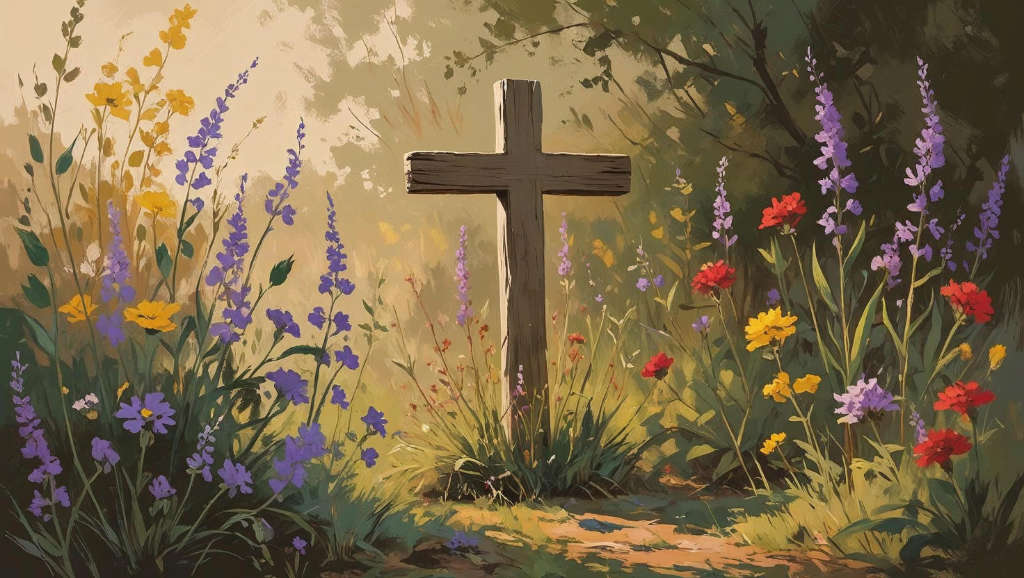
And when this Mass is celebrated within creation itself, it becomes a powerful act of communion.
It allows us to pray with creation, not just for it—to be immersed in the living world and, as Laudato Si’ teaches,
“see nature as a magnificent book in which God speaks to us and grants us a glimpse of His infinite beauty and goodness” (LS 12).
In these sacred outdoor celebrations—under the sky, among trees, surrounded by the sounds of life—we remember that the Earth is not only a gift to be protected,
but a sanctuary where God dwells and speaks.
This Mass matters because it calls us to worship with open eyes, open hearts, and open hands—rooted in the soil of creation and reaching toward heaven in hope.
Download Your Catholic Liturgical Guide Now
Seeds of Peace and Hope
This year, we also mark the 10th World Day of Prayer for the Care of Creation, and Pope Leo XIV’s message reminds us that we are called to be “seeds of peace and hope.” Inspired by the teachings of Laudato Si’, and rooted in the words of the prophet Isaiah, the Pope calls us to recognize that true ecological conversion involves justice, reconciliation, and care—especially for the most vulnerable.
“Now is the time to follow words with deeds,” Pope Leo writes. “By working with love and perseverance, we can sow many seeds of justice and contribute to the growth of peace and the renewal of hope.”
Just like a seed that breaks through the hardened ground to bring forth beauty and life, this new liturgy—and the entire Season of Creation—is an invitation to spiritual renewal and faithful action.
The Garden as a Symbol of Hope
This year’s Season of Creation invites us to contemplate the symbol of the garden—a place where harmony, life, and God’s presence are nurtured. Gardens remind us of our role as stewards, and they offer sacred spaces to pray with creation, not just for it.
At Laudato Si’ Movement, we are already witnessing this lived out in beautiful ways. For example, the EchoCharityGarden in Rome, led by our Member Organization the Sisters of Charity of Saint Jeanne Antida and the Diocese of Rome holds monthly Masses in creation, in collaboration with our Trastevere Laudato Si’ Circle, bringing the faithful into deeper communion with the Earth and one another.
And this garden is not alone. Across the world, more and more communities within LSM are gathering in gardens—both literal and symbolic—to celebrate Mass, reflect, and be transformed. We invite you to explore and use the Mass for the Care of Creation as a guide for your own community celebrations:
We dream of seeing more parishes and dioceses embrace this new liturgy outdoors, in gardens, parks, and sacred natural spaces. We invite bishops and clergy everywhere to lead their people in prayer within creation itself, showing that the Church not only speaks about ecological conversion, but lives it.” or “This year’s Season of Creation invites us to contemplate the symbol of the garden—a place where harmony, life, and God’s presence are nurtured. Gardens remind us of our role as stewards, and they offer sacred spaces to pray with creation, not just for it.
What’s next?
The new Mass is expected to be embraced by communities around the world—especially during the Season of Creation (September 1 to October 4), where we are invited to unite in prayer and action for our common home. These words of the prophet will accompany the “Season of Creation,” an ecumenical initiative to be celebrated from 1 September to 4 October 2025.“
We invite you to visit seasonofcreation.org to explore the Celebration Guide and practical resources to help you and your community pray, reflect, and act with renewed faith and commitment.
Let this Mass be more than a liturgical addition
Let it be a sign of conversion, hope, and a shared journey of love for creation.
Let it begin… in the garden.