




Where is your treasure?
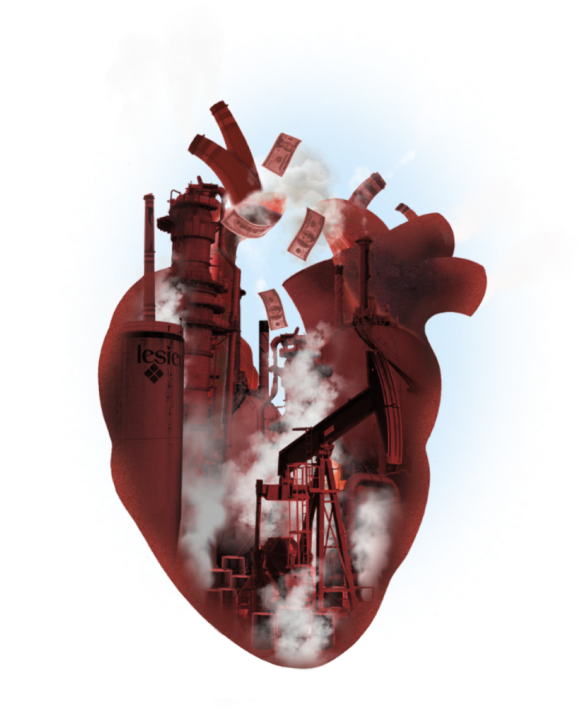
Join the growing movement of Catholic institutions living out their values by divesting from fossil fuels.
“The necessary transition towards clean energy sources such as wind and solar energy, and the abandonment of fossil fuels, is not progressing at the necessary speed”
(LD 55)
Divest your money from fossil fuels
“We know that things can change!” (Laudato Si’ 13)
Why should we divest from fossil fuels?

A world powered by clean, healthy, sustainable energy that is accessible to all is possible. It is being built every day by the increasing investments in renewable energy. This is an exciting transformation that is accelerating across the world!

If we remain invested in polluting, climate-destroying fossil fuels, this necessary change cannot take place. And the poor suffer first and worst from climate impacts, while we are all seeing the changes in our common home, from flooding in Pakistan to a typhoon in Alaska to an unprecedented hurricane hitting Puerto Rico and Florida to heat waves, forest fires, and more.

This is why Catholics and people of goodwill across the world are re-investing away from fossil fuels, and leading this transformation.
Will my institution lose money by divesting?
Catholic institutions that have the privilege of managing financial assets often rely on steady returns from them. The good news is that divesting from fossil fuels is a sound and prudent financial decision. Investment managers recognize the increasing risks of fossil fuel investment. The growing rejection of fossil fuels by world governments means that fossil fuel assets will be stranded, and these investments are losing value. On the other hand, renewable energy projects are profitable and much needed.
Are there already Catholic institutions that have divested?
Check in the list here the institutions that have already divested : please contact us, and we can help you by putting you in contact with one of these institutions.
Concretely, what does divestment imply?
Once an institution knows what industry it does not want to support anymore, divestment can be as simple as writing down a list of “negative screening”, which means a list of companies or types of companies it does not want to be tied to, and make their external asset managers follow these guidelines.
It can be a bit broader and exclude companies that are exposed to the fossil fuel industry, like financial institutions, insurance companies or industries working closely with companies developing new fossil fuel projects.
Use the examples below to start thinking what makes sense for your institution:
Congregation X has a contract with the asset management firm GFT. They rely on returns to finance their older sisters’ retirement. Their current deal implies that their portfolio cannot include any form of asset related to industries related to war and other social issues.
They negotiate a new deal with a new exclusion : fossil fuels. Within 2 years, their portfolio will be cleared from fossil fuel related financial products.
Lay organization Y does not work with an asset manager : they only own a building, and simple financial products managed by their bank, aside from a current account. Their bank is known for financing new coal plants.
They switch banks for an ethical bank, and commit not to own any asset related to the fossil fuel industry in the future.
Diocese of Z has a wealth of assets, managed by different contractors and in-house. Wanting to be aligned with Catholic Social Teaching, they pledge to divest from the most polluting industry, and start the work for their in-house financial assets.
They negotiate with their asset managers, set a clear timeline. After 3 years, they eventually leave one of their asset managers reluctant to implement the new policy.
INVEST IN OUR PLANET RESOURCES
Catholic Resources
Read the Catholic case for fossil fuel divestment
This comprehensive overview, created by Trócaire, will guide you through climate science, the Catholic teaching behind divestment, and the concrete steps communities have taken to put teaching into practice.
The Franciscan Sisters of Mary divested in 2014;
Our Chapter in Canada made a comprehensive guide (En – Fr), to see, judge and act about climate change regarding your investment policies
Institute of the Sisters of Mercy of Australia and Papua New Guinea, a deeply helpful look at the concrete steps this institution took before, during, and after divestment;
Jesuits in English Canada
Powerpoint slides
Benefits of Divestment
Two economies collide: Competition, conflict, and the financial case for fossil fuel divestment | IEEFA.
This recent study shows how divestment makes sense from a financial perspective.
Clean Energy Investing: Global Comparison of Investment Returns | Imperial College Business School
This joint report by the International Energy Agency and the Centre for Climate Finance & Investment shed light on the long-term prospects for clean energy, and their outstanding financial performance.