



Johannesburg, South Africa
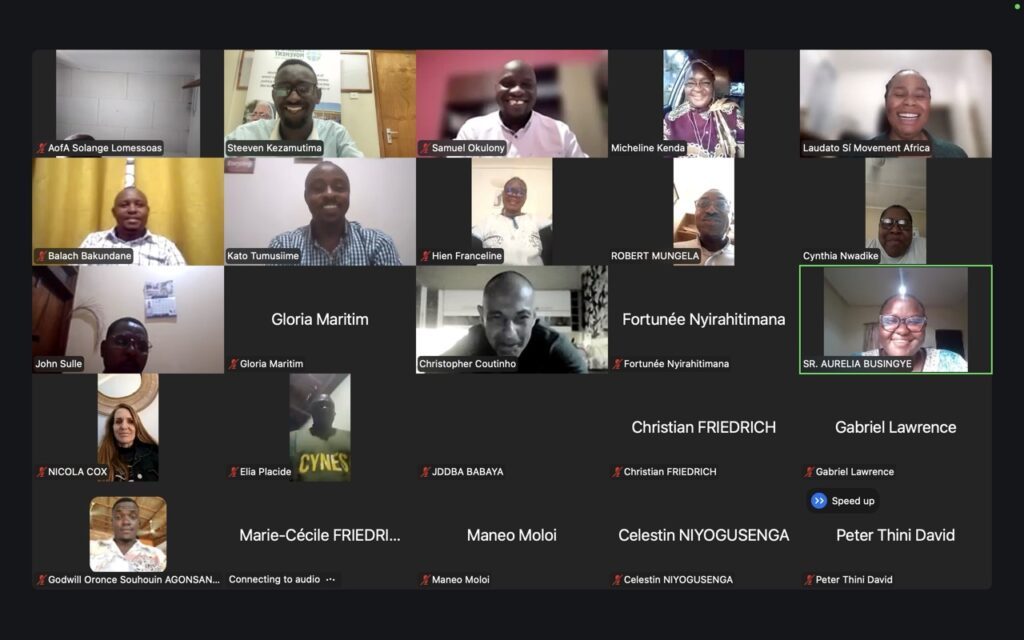
Laudato Si Movement Africa held a pre Earth Day webinar and brought together faith leaders, community organisers, journalists, lawyers, campaigners, and frontline voices from Uganda, Tanzania, and the Democratic Republic of Congo for a conversation: what does climate justice look like when communities are paying the price for fossil fuel development?
Our Power, Our Planet: A Recommitment to the Fight for Climate Justice and Community Rights webinar, was more than a discussion . It was a reminder that behind every fossil fuel project are real people, real communities, and real ecosystems whose futures are being shaped by decisions often made far from where the impacts are felt.
Following the global conference on transitioning away from fossil fuels in Santa Marta, the webinar created an opportunity to centre the voices of communities living with the impacts of extraction in East Africa and to reflect on what a just transition means in practice.
Balach Bakundane opened the discussion with a stark picture of the East African Crude Oil Pipeline (EACOP). Stretching 1,443 kilometres from Uganda to Tanzania, the project is expected to generate over 33 million metric tonnes of carbon per year.
millions of tonnes of carbon emissions annually while affecting thousands of households through land acquisition, environmental degradation, and the disruption of livelihoods.
The most powerful moments came from the voices of those organising alongside affected communities every day. Representatives from Uganda, Tanzania, and the Democratic Republic of Congo reflected on what they are witnessing on the ground. They spoke of families losing land they depended on for generations. They spoke of uncertainty, shrinking livelihoods, and growing pressure on communities that choose to speak out. But they also spoke of courage.
Communities are organising. Networks are growing. People who once felt isolated are finding collective strength. Across the region, citizens are demanding accountability, defending their rights, and insisting that development cannot come at the expense of human dignity or the environment.
The conversation then shifted to an equally important question: how do harmful fossil fuel projects continue despite growing public concern?
Journalist Joseph Silali, lawyer Tumusiime Kato, and finance expert Samuel Okulony explored the role of media, law, and finance in advocacy. Their reflections highlighted that experts and communities can work together to call for a just and sustainable future
The webinar concluded with a renewed call to action. Participants were encouraged to organise and join activities during Laudato Si’ Week, particularly calling for a fossil free future, read and share the Manifesto of the Churches of the Global South for Our Common Home and the theological reflection , and continue building awareness of the climate crisis within their own communities.
These actions may appear small on their own. But together they create something powerful: a movement committed to protecting creation, defending communities, and advocating for a future beyond fossil fuels.