





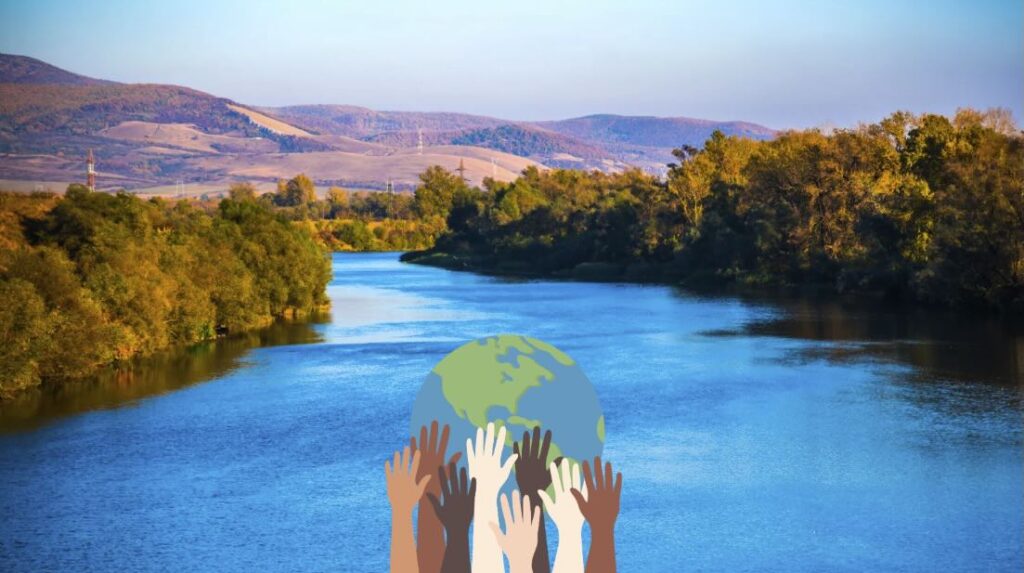
As we celebrate the Season of Creation under the theme “Living Water,” Pope Leo XIV’s theme for the 2027 World Day of Peace invites us to ask a timely question: Is our technological progress truly serving life, peace and our common home?
For the 60th World Day of Peace, to be celebrated on January 1, 2027, Pope Leo XIV has chosen the theme “Disarming Technology, Serving Peace: Politics as Preventive Responsibility.”
The announcement from the Dicastery for Promoting Integral Human Development places human dignity and responsibility at the heart of an increasingly technological world.
The Holy Father offers a powerful reminder: “No algorithm can make war morally acceptable.” The theme draws particular attention to the dangers of entrusting military decisions to artificial intelligence and calls on the international community to safeguard human responsibility when human lives and peaceful coexistence are at stake.
But this call reaches beyond the battlefield. It asks us what kind of progress we are building—and whether technology remains at the service of life rather than becoming another instrument of domination.
What does our progress serve?
Laudato Si’ gives us a framework for understanding this challenge: everything is connected.
Pope Francis warned of the dangers of technology separated from ethics and of a technocratic paradigm in which technological power becomes increasingly difficult to limit. Integral ecology offers another way of understanding progress—one that considers human dignity, the wellbeing of communities and the protection of creation together.
This is why Pope Leo XIV’s call to “disarm technology” can also be read through the lens of integral ecology.
To disarm technology is not to reject innovation. It is to ask what—and whom—innovation serves.
Does it protect life? Does it strengthen communities? Does it help our common home flourish?
As Laudato Si’ reminds us, “peace, justice and the preservation of creation are three absolutely interconnected themes.”
Disarming the logic of domination
Behind the question of technology lies a deeper question about power.
The same mentality that allows creation to be treated simply as something to control, extract and exploit can emerge when technological capability is treated as an unlimited expression of human power.
Integral ecology challenges this logic.
Our common home is not simply a collection of resources waiting to be used. People are not data points. Rivers are not merely commodities. And peace cannot be calculated by an algorithm.
True progress must remain rooted in relationship—with God, with one another and with the Earth.
Living Water: choosing what gives life
This year, the Season of Creation invites Christians around the world to contemplate Living Water.
A healthy river does not exist in isolation. It connects forests, soil, communities, animals and oceans. When one part of that system is poisoned or exploited, the consequences flow downstream.
Our human family works in much the same way.
War, ecological destruction, inequality and irresponsible uses of technology may appear to be separate crises, but integral ecology helps us recognize their connections.
The question, then, is not simply whether humanity will continue developing new technologies. It is whether those technologies will flow toward life, dignity, justice and peace.
From disarmament to ecological conversion
Ecological conversion calls for a transformation of the way we understand power, progress and our place within creation.
In that sense, disarming technology can become part of ecological conversion: choosing technologies that serve life, questioning systems that sacrifice people or ecosystems for efficiency, and ensuring that emerging technologies remain accountable to human dignity and the common good.
Pope Leo XIV’s call for 2027 therefore begins long before January 1. It can begin now.
During this Season of Creation, communities around the world are already showing another way forward: protecting water, restoring ecosystems, praying together, advocating for justice and taking concrete action for our common home.
Each action may appear small. But together, they become streams joining a much larger river.
What would happen if every technological, political and economic decision began with one simple question: Does this help life flourish?
Perhaps this is where disarmament begins—not only by preventing technologies that can destroy life, but by strengthening the relationships that sustain it.
This Season of Creation, add your stream to the river of Living Water. Share your story and discover how communities around the world are bringing integral ecology to life.