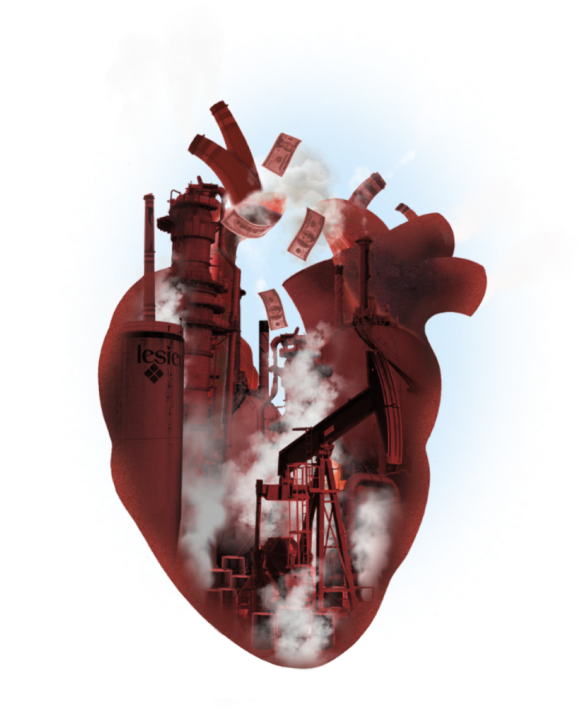





Where is your treasure?

Join the growing movement of Catholic institutions living out their values by divesting from fossil fuels.
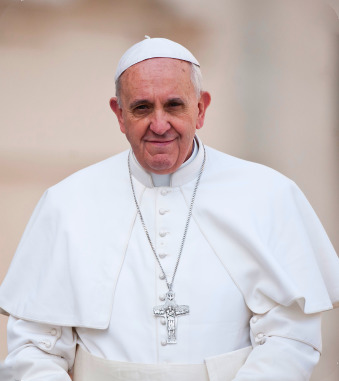
“The necessary transition towards clean energy sources such as wind and solar energy, and the abandonment of fossil fuels, is not progressing at the necessary speed”

(LD 55)

Divest your money from fossil fuels

“We know that things can change!” (Laudato Si’ 13)

Why should we divest from fossil fuels?

A world powered by clean, healthy, sustainable energy that is accessible to all is possible. It is being built every day by the increasing investments in renewable energy. This is an exciting transformation that is accelerating across the world!

If we remain invested in polluting, climate-destroying fossil fuels, this necessary change cannot take place. And the poor suffer first and worst from climate impacts, while we are all seeing the changes in our common home, from flooding in Pakistan to a typhoon in Alaska to an unprecedented hurricane hitting Puerto Rico and Florida to heat waves, forest fires, and more.

This is why Catholics and people of goodwill across the world are re-investing away from fossil fuels, and leading this transformation.

Will my institution lose money by divesting?

Catholic institutions that have the privilege of managing financial assets often rely on steady returns from them. The good news is that divesting from fossil fuels is a sound and prudent financial decision. Investment managers recognize the increasing risks of fossil fuel investment. The growing rejection of fossil fuels by world governments means that fossil fuel assets will be stranded, and these investments are losing value. On the other hand, renewable energy projects are profitable and much needed.

Are there already Catholic institutions that have divested?

Check in the list here the institutions that have already divested : please contact us, and we can help you by putting you in contact with one of these institutions.

[difl_advanced_data_table csv_upload_data=”https://bucket-lsm.s3.us-west-2.amazonaws.com/lsm/wp-content/uploads/2026/03/16165336/LSM-website-list-of-Catholic-divestment-commitments-updated-110326.xlsx-NEW-Div-List-LSM-website-110326-1.csv” head_background_bgcolor=”#23AE64″ module_id=”divestInstitution” _builder_version=”4.27.6″ _module_preset=”default” head_text_text_color=”#FFFFFF” background_color=”#FFFFFF” hover_enabled=”0″ locked=”off” global_colors_info=”{}” sticky_enabled=”0″][/difl_advanced_data_table]

Concretely, what does divestment imply?

Once an institution knows what industry it does not want to support anymore, divestment can be as simple as writing down a list of “negative screening”, which means a list of companies or types of companies it does not want to be tied to, and make their external asset managers follow these guidelines.

It can be a bit broader and exclude companies that are exposed to the fossil fuel industry, like financial institutions, insurance companies or industries working closely with companies developing new fossil fuel projects.

Use the examples below to start thinking what makes sense for your institution:

Congregation X has a contract with the asset management firm GFT. They rely on returns to finance their older sisters’ retirement. Their current deal implies that their portfolio cannot include any form of asset related to industries related to war and other social issues.

They negotiate a new deal with a new exclusion : fossil fuels. Within 2 years, their portfolio will be cleared from fossil fuel related financial products.

Lay organization Y does not work with an asset manager : they only own a building, and simple financial products managed by their bank, aside from a current account. Their bank is known for financing new coal plants.
They switch banks for an ethical bank, and commit not to own any asset related to the fossil fuel industry in the future.

Diocese of Z has a wealth of assets, managed by different contractors and in-house. Wanting to be aligned with Catholic Social Teaching, they pledge to divest from the most polluting industry, and start the work for their in-house financial assets.
They negotiate with their asset managers, set a clear timeline. After 3 years, they eventually leave one of their asset managers reluctant to implement the new policy.

INVEST IN OUR PLANET RESOURCES

Catholic Resources

Read the Catholic case for fossil fuel divestment

This comprehensive overview, created by Trócaire, will guide you through climate science, the Catholic teaching behind divestment, and the concrete steps communities have taken to put teaching into practice.

The Franciscan Sisters of Mary divested in 2014;

Our Chapter in Canada made a comprehensive guide (En – Fr), to see, judge and act about climate change regarding your investment policies

Institute of the Sisters of Mercy of Australia and Papua New Guinea, a deeply helpful look at the concrete steps this institution took before, during, and after divestment;

Jesuits in English Canada

Powerpoint slides

Benefits of Divestment
Two economies collide: Competition, conflict, and the financial case for fossil fuel divestment | IEEFA.
This recent study shows how divestment makes sense from a financial perspective.
Clean Energy Investing: Global Comparison of Investment Returns | Imperial College Business School
This joint report by the International Energy Agency and the Centre for Climate Finance & Investment shed light on the long-term prospects for clean energy, and their outstanding financial performance.

More information about divestment

“We know that technology based on the use of highly polluting fossil fuels–especially coal, but also oil and, to a lesser degree, gas–needs to be progressively replaced without delay….Politics and business have been slow to react in a way commensurate with the urgency of the challenges facing our world.”

Pope Francis, Laudato Si’ 165

“We, Cardinals, Patriarchs, and Bishops, issue a general call and make ten specific policy proposals. We call on COP 21 . . . to develop new models of development and lifestyles that are climate compatible, address inequality and bring people out of poverty. Central to this is to put an end to the fossil fuel era, phasing out fossil fuel emissions, including emissions from military, aviation and shipping, and providing affordable, reliable and safe renewable energy access for all.”

Continental Bishops’ Conferences, COP 21 Appeal

“Yet even more worrying is the continued search for new fossil fuel reserves, whereas the Paris Agreement clearly urged keeping most fossil fuels underground. . . .Civilization requires energy, but energy use must not destroy civilization!

Pope Francis, speech to fossil fuel CEOs and investors, June 2018

“We reiterate our urgent call to “put an end the fossil fuel era” through a rapid transition to an economy powered by renewable energy, as we know from scientists that most fossil fuel reserves need to remain underground.”

Continental Bishops’ Conferences, Joint statement on climate justice

"The signs today are not good. Investments in fossil fuels continue to rise, even though scientists tell us that fossil fuels should remain underground."

Pope Francis, address to finance ministers May 2019

“We assume and support the divestment campaigns from extractive companies related to the socio-ecological damage of the Amazon, starting with our own ecclesial institutions and also in alliance with other churches."

Synod of Bishops for the Pan-Amazon Region, Final Document 70

“The businesses, national or international, which harm the Amazon and fail to respect the right of the original peoples to the land and its boundaries, and to self-determination and prior consent, should be called for what they are: injustice and crime. When certain businesses out for quick profit appropriate lands and end up privatizing even potable water, or when local authorities give free access to the timber companies, mining or oil projects, and other businesses that raze the forests and pollute the environment, economic relationships are unduly altered and become an instrument of death.”

Pope Francis, Apostolic Exhortation Querida Amazonia 14

“Yet even as we feel this healthy sense of indignation, we are reminded that it is possible to overcome the various colonizing mentalities and to build networks of solidarity and development. “The challenge, in short, is to ensure a globalization in solidarity, a globalization without marginalization”.[15] Alternatives can be sought for sustainable herding and agriculture, sources of energy that do not pollute, dignified means of employment that do not entail the destruction of the natural environment and of cultures.”

Pope Francis, Apostolic Exhortation Querida Amazonia 17

“Spread the use of ethical, responsible and integral criteria for investments, avoiding the support to harmful companies to human or social ecology (for example abortion and weapons) and for environmental ecology (for example fossil fuels).”

“Promote social and environmentally responsible investments, for example by evaluating the progressive divestment from the fossil fuel sector”

Journey Toward our Common Home, Five years after Laudato Si, Interdicasterial Working Group  Of The Holy See On Integral Ecology p. 178,179

"We know that the fossil fuels are causing the climate crisis and destroying our planet. Still, we keep on investing [in] the dirty fossil fuels.. It is a physical imperative that we change course, that we divest… It is also a moral imperative. Our own brothers and sisters around the world are already suffering due to the climate crisis, and we cannot push them to greater sufferings… It is also a theological imperative. Earth is God's creation entrusted to our stewardship. We need to take care of God's creation. So let us be courageous. Let us divest."

Salesian Fr. Joshtrom Kureethadam, head of Dicastery for Promoting Integral Human Development's ecology and creation sector, May 19th 2021

“Given the harm that the production and consumption of fossil fuels is causing to the environment and to populations in low-income countries, it was not right to profit from investment in these companies … “Disinvestment is a sign that justice demands that we must move away from fossil fuels.”

Bishop Bill Nolan of Galloway, head of the Scottish Bishops’ Conference October 26th 2021

“Given the harm that the production and consumption of fossil fuels is causing to the environment and to populations in low-income countries, it was not right to profit from investment in these companies … “Disinvestment is a sign that justice demands that we must move away from fossil fuels.”

Bishop Bill Nolan of Galloway, head of the Scottish Bishops’ Conference October 26th 2021