





From the climate crisis to ecological transformation
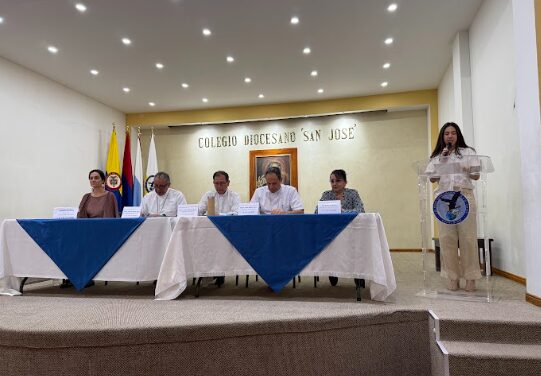
At a critical moment for the planet, the First International Conference on the Transition Beyond Fossil Fuels, held in Santa Marta, brought together more than 50 countries, along with leaders from the Church, civil society, and communities in the Global South, to advance a just, participatory, and global energy transition.
More than just a technical forum, the conference made it clear that the climate challenge is also ethical, spiritual, and social, in deep harmony with the call of Laudato Si’
A global emergency that calls on everyone
Bishop José Mario Bacci of Santa Marta emphasized that the world is at a decisive moment:
“This transition away from fossil fuels is an urgent matter that concerns us all.”
He stressed that this challenge represents a moral imperative that directly challenges the Church’s mission: to carry this message beyond the halls of power, into communities and everyday life.
A single voice from the Global South
Churches from the Global South—including those in Latin America, Africa, and Asia—presented a unified message: a just transition is only possible through cooperation, multilateralism, and genuine community participation.
Bishop José Domingo Ulloa of CELAM highlighted a key milestone: the drafting of a joint manifesto across continents, reflecting a unified voice in the face of the climate crisis.
Among the specific proposals are:
- The creation of a social and academic observatory to monitor the transition
- Initiatives to swap debt for climate action
- An interfaith ethics committee to guide the processes
The message is clear: people cannot be mere spectators; they must take the lead.
The Church: faith, action, and advocacy
The Church reaffirmed its role as an active player in society, not only through faith but also through public advocacy.
Bishop Juan Carlos Barreto noted that:
“The climate crisis is a moral and spiritual crisis… it calls for conversion, not just technology.”
From this perspective, the path forward involves listening to communities, the most vulnerable, the scientific community, and local regions, in order to act with consistency and moral authority.
A truly just transition
One of the key points was the need for the energy transition to be:
- Fair: respecting the rights of the most vulnerable
- Gradual: with responsible planning
- Equitable: leaving no one behind
The warning was clear: one extractive model cannot be replaced by another, as might happen with an unregulated transition in the mining sector.
The voice of the territories and the cry for life
From the Amazon and other territories, a call was made for a comprehensive transition that includes:
- Food, water, and energy sovereignty
- Protection of human rights
- Peacebuilding
The urgency of protecting environmental leaders and ensuring their active participation was also emphasized.
Spirituality and climate justice
The climate crisis was also addressed as a crisis of meaning. Faith-based networks from the Global South emphasized that:
“There is no climate justice without social justice.”
In line with Laudato Si’, it is reaffirmed that caring for our common home involves transforming our relationship with God, with one another, and with creation.
From dialogue to action
The conference concluded with a clear commitment: to continue promoting a just transition through advocacy, collaboration among stakeholders, and grassroots action.
For the Laudato Si’ Movement, this call resonates deeply with the spirit of Laudato Si’ Week 2026: from hope to action.
It is an invitation for every community, parish, and individual to take a concrete step toward caring for our common home.
A continuing call
Today more than ever, the transition away from fossil fuels needs voices, action, and commitment.
The Global South Church has spoken clearly.
Now, the call goes out to everyone: listen, discern, and act.
Watch the full conference: https://www.youtube.com/live/2JFmUe16rzA?si=xcxuOvfR_3ce-Zf7
Credit: Adapted based on contributions from Ángel Morillo (CELAM).